

AI reverse image safety search
On the morning of Saturday, January 24, 2026, in the streets of Minneapolis, a 37-year-old intensive care unit nurse named Alex Jeffrey Pretti was shot and killed by federal agents. He was a United States citizen. He was licensed to carry a concealed firearm. He was unarmed in his hands when the bullets struck him.
Multiple bystander videos captured what happened on that frozen street. They show Alex Pretti being pepper sprayed in the face. They show him being tackled to the icy pavement by at least six federal officers. They show him pinned to the ground, his hands visible, while border patrol agents fired approximately ten rounds into his body.
These videos directly contradict the official government account released within minutes of the shooting death—a narrative that claimed Pretti “violently resisted” and posed an imminent threat of “maximum damage and massacre.”
This killing occurred amid “Operation Metro Surge,” a massive federal immigration enforcement campaign that had flooded Minneapolis with thousands of ice agents, border patrol agents, and other federal officers. The national guard had been activated by Governor Tim Walz. The city was already on edge following the earlier fatal shooting of Renee Good by federal immigration agents just weeks before.
What happened to Alex Pretti is not merely a local tragedy in the twin cities. It is a stark warning about what happens when federal agencies treat American streets like occupied territory, when immigration enforcement becomes indistinguishable from political intimidation, and when the federal government can execute a citizen in broad daylight—then immediately vilify him as a terrorist before any investigation has begun.
This article argues, based on publicly available evidence, that Alex Pretti’s killing was both avoidable and unjustifiable in a constitutional democracy. This should never have happened.
Alex Jeffrey Pretti was born in Illinois and raised as a midwesterner who loved the outdoors. He studied biology at the University of Minnesota’s College of Liberal Arts, graduating in 2011. He became a registered nurse, eventually working in intensive care units in Minneapolis, where he treated some of the city’s sickest and most vulnerable patients.
At 37 years old, Alex was a white American citizen with no criminal record beyond minor traffic tickets. His colleagues at the U.S. Department of Veterans Affairs, where he worked as an icu nurse, described him as dedicated and compassionate. The American Federation of Government Employees Local 704, his union, called him a member who cared deeply about his patients and his community.
Alex was politically engaged in ways that put him in the streets. He was a participant in protests after the killing of George Floyd in Minneapolis. He was vocally opposed to Trump administration immigration policies, particularly family separations and street detentions by ice. His ex-partner described him as someone who saw these practices as “kidnapping children” and who felt compelled to speak out against what he viewed as systematic injustice.
Those who knew him described a kindhearted soul who lived alone in a Minneapolis condo, raced bicycles competitively, and loved his dog. His parents, who lived in Colorado, remembered him as an outdoorsman who cherished the natural world but despised environmental degradation and systemic abuses. Neighbors recalled that during the tense days following the Renee Good killing, Alex had tipped a Latino worker $100—a small act that spoke to his character during a moment of community fear.
Alex held a valid Minnesota permit to carry a concealed firearm, which he had obtained about three years before his death. He was not known for physical confrontation. Friends and family said his activism was verbal—he would shout criticisms at law enforcement during protests, but he never engaged physically. His criminal record consisted entirely of traffic tickets.
This was the man identified by federal officials as a violent threat intent on massacring agents.
The morning of Saturday, January 24, 2026, dawned cold in Minneapolis. Federal agents from Border Patrol and ice had been conducting immigration enforcement operations in south Minneapolis for days as part of “Operation Metro Surge.” Protests had been ongoing since the killing of Renee Good, and tensions in the city were running dangerously high.
Shortly after 9:00 a.m. local time, Alex Pretti arrived near the federal operation. According to eyewitness accounts and bystander videos obtained by the Associated Press and other outlets, Alex appeared to be filming the federal agents with a camera or phone in one hand. Some witnesses described him helping or attempting to shield a woman in the area.
What happened next unfolded in seconds.
At least seven federal officers, including agents from Border Patrol and possibly ice, converged on Alex. One agent deployed pepper spray directly into his face. The video shows Alex raising his hand instinctively—not reaching for a weapon, but blocking the chemical spray now burning his eyes.
Agents then tackled him to the frozen ground. The video shows six officers restraining him facedown on the ice-covered pavement. His hands were visible. His hands were on the ground.
While Alex was pinned and incapacitated, another agent located and removed a 9mm semiautomatic handgun from his waistband. The gun had been legally carried and concealed—not brandished, not drawn, not pointed at anyone.
Then, critically, after the gun had been secured—after an agent had already begun walking away with the weapon—another border patrol agent fired multiple shots into Alex Pretti while he remained prone and subdued on the ground.
Witnesses reported hearing approximately ten rounds.
Alex Pretti died on that frozen street, roughly a mile from where Renee Good had been killed by federal immigration agents weeks earlier.
Local police and ambulances arrived rapidly after the shooting. But by then, the federal government’s narrative machine had already begun spinning.

Within minutes of the shooting, before any investigation could possibly have been conducted, the Department of Homeland Security and U.S. Border Patrol issued public statements through officials like Commander Greg Bovino.
Their account claimed that Alex Pretti:
“Approached” officers with a handgun
“Violently resisted” when agents tried to disarm him
Posed an imminent threat of “maximum damage and massacre”
Forced agents to fire “defensive shots” in self defense
DHS spokesperson Tricia McLaughlin described the shooting as officers acting in self-defense during immigration enforcement operations. Federal officials quickly framed Alex not just as a threat, but as a potential “domestic terrorist.”
The video evidence tells a different story entirely.
Multiple bystander videos show Alex retreating, not approaching. They show him holding a phone or camera in his hand, not a gun. They show him being pepper sprayed without warning. They show him being wrestled violently to the ground by multiple agents. They show him pinned facedown, hands visible and empty.
They show him being shot while he was already subdued and restrained.
Minneapolis Police Chief Brian O’Hara confirmed publicly that Alex was a lawful gun owner with a valid permit to carry. He confirmed that Alex’s criminal record contained only minor traffic infractions. He confirmed that there was no history of violence.
Alex’s family has been unequivocal in rejecting the official narrative.
“Sickening lies,” they called the government’s claims. They insisted—and the video evidence supports—that Alex had his phone in his hand, not a gun. They believe he was trying to protect another person when agents attacked him.
The gap between what federal officials claimed at their news conference and what Americans can see with their own eyes could not be wider.
Alex Pretti’s parents released statements describing their son as a kindhearted soul devoted to his patients and committed to making a difference through nursing. They had spoken to him just days before his death, discussing mundane things like garage repairs. Nothing in their final conversations suggested any intent toward violence or self-harm.
“We are heartbroken but also very angry,” his family said. They denounced the administration’s characterization of Alex as armed and dangerous. They demanded the release of all video footage. They called for an independent investigation free from federal government control.
The American Federation of Government Employees did not mince words. The union labeled the killing a “murder” of one of their members by federal agents—an extraordinary statement reflecting the depth of outrage within the federal workforce itself.
The Minnesota Gun Owners Caucus expressed deep concern about the killing of a lawful gun owner where no intent to harm officers was evident. They called for both state and federal investigation into the circumstances. Their statement affirmed that citizens retain the constitutional right to bear arms, even in proximity to protests, and expressed alarm that licensed gun owners could be summarily killed based on vague claims of threat.
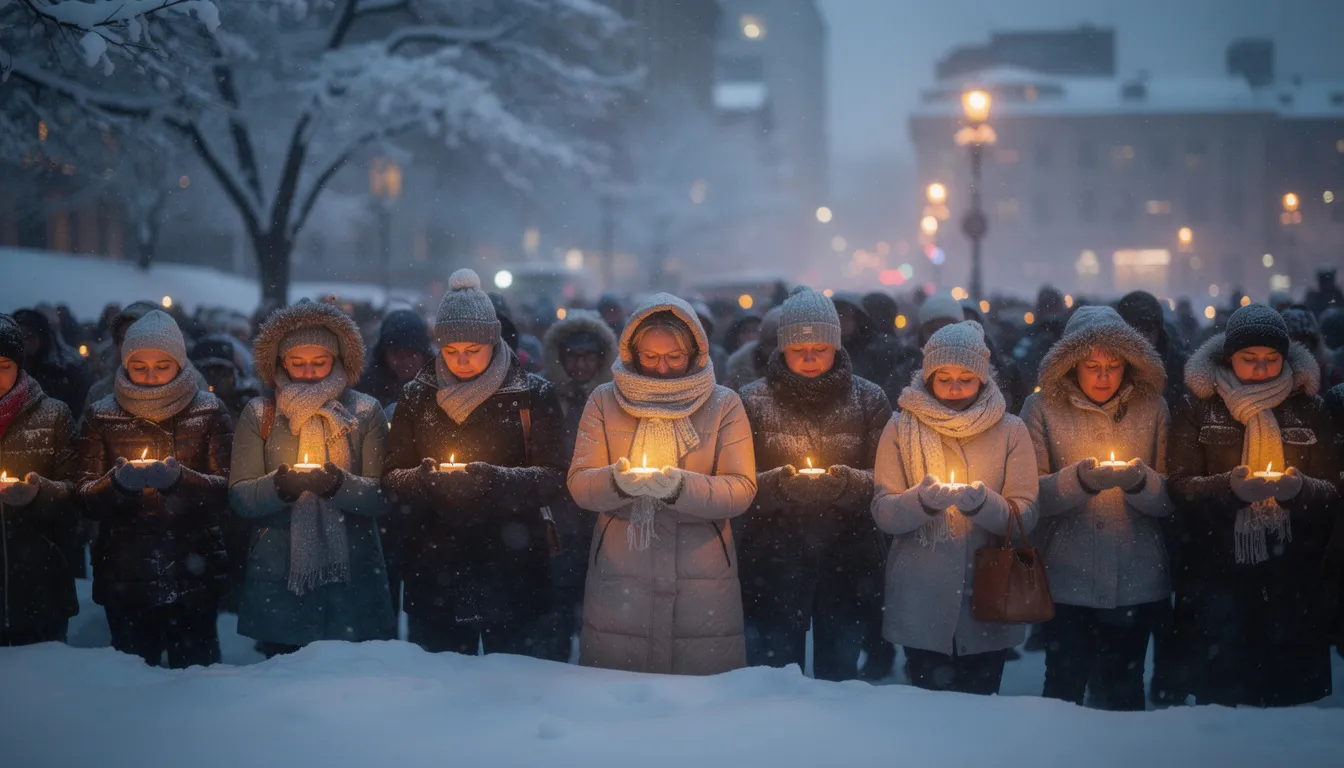
In the streets of Minneapolis, community members gathered despite sub-freezing temperatures. Vigils formed. Protesters chanted “say his name” for both Alex Pretti and Renee Good.
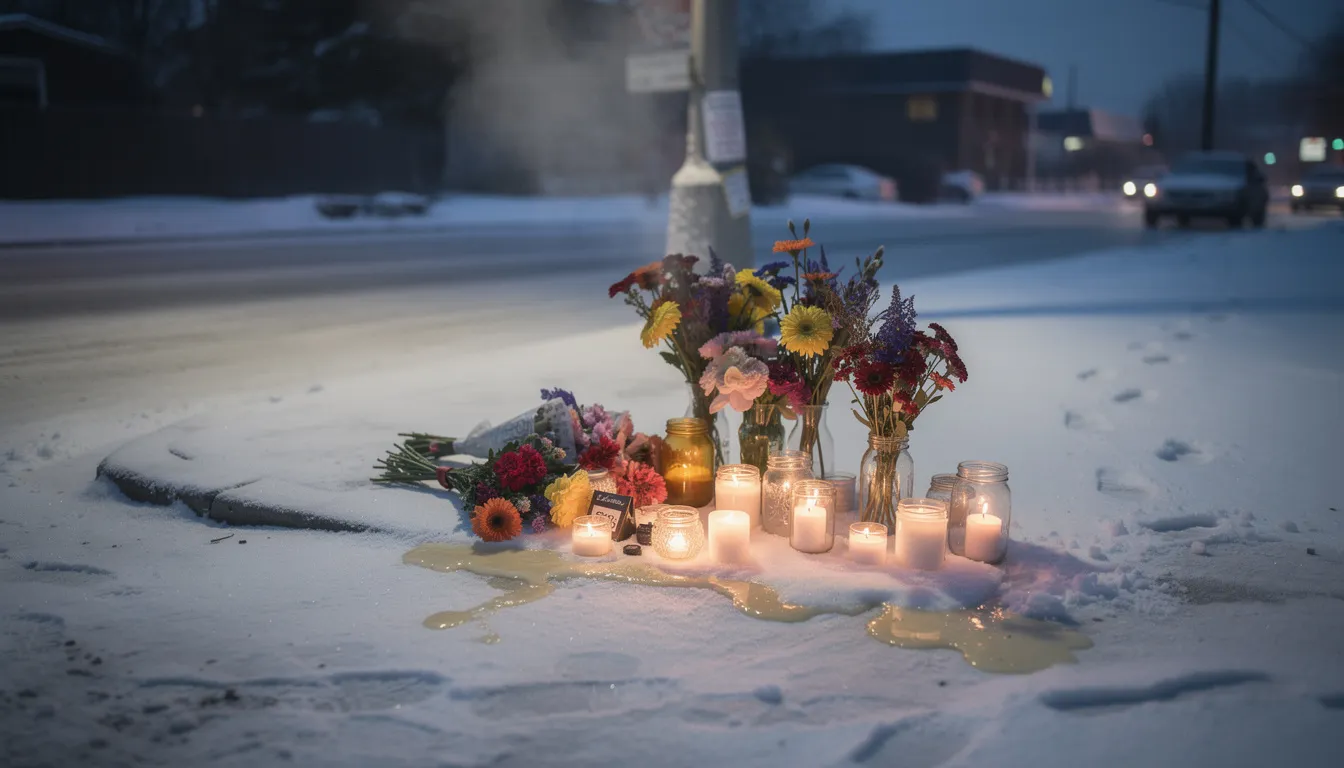
A makeshift memorial appeared at a bus stop near the shooting site—flowers and candles placed on frozen concrete by mourners who had watched the videos and refused to accept the official story.
Local businesses responded to the crisis. Allison Bross, who owns a fashion store near the protest areas, opened her doors to provide warmth, coffee, water, bathrooms, and basic medical attention to those gathering in the cold.
The community’s message was clear: they had seen what happened with their own eyes. They would not believe the sickening lies told by federal authorities.
The political response was immediate and fierce.
Governor Tim Walz called the federal presence in Minneapolis “organized brutality” and a “federal occupation.” He demanded the removal of the approximately 3,000 federal agents operating in the state. He vowed that Minnesota—not the Department of Homeland Security—would lead the investigation into Alex Pretti’s death.
Minneapolis Mayor Jacob Frey pleaded for an end to “Operation Metro Surge.” In an emotional briefing, he warned: “Please, do not destroy our own city.” He argued that the federal response was undermining peace, safety, and fundamental American values.
Minnesota’s congressional delegation responded forcefully:
Official | Response |
|---|---|
Sen. Amy Klobuchar | Condemned ICE’s surge, called the killing “sickening” |
Sen. Tina Smith | Demanded federal agents leave Minnesota |
Rep. Angie Craig | Called for all officers involved to be suspended pending investigation |
Official
Response
Sen. Amy Klobuchar
Condemned ICE’s surge, called the killing “sickening”
Sen. Tina Smith
Demanded federal agents leave Minnesota
Rep. Angie Craig
Called for all officers involved to be suspended pending investigation
In Washington, the fallout escalated. Senate Democrats including Chuck Schumer, Catherine Cortez Masto, Jacky Rosen, Brian Schatz, and Bennie Thompson vowed to block Department of Homeland Security funding bills unless ice operations were reined in or defunded.
Some called for the impeachment of Homeland Security Secretary Kristi Noem. Others demanded her immediate resignation. Several members threatened to shut down the federal government entirely rather than continue funding current ice operations.
The Republican response took a starkly different tone.
Defense Secretary Pete Hegseth praised ice agents as “patriots.” Vice President JD Vance blamed Minnesota officials for refusing to cooperate with ice enforcement. President Donald Trump defended the shooting and accused Minnesota leaders of inciting insurrection by opposing federal operations.
The killing of Alex Pretti had become a flashpoint in a national battle over immigration enforcement, civil liberties, and the limits of federal power in American cities.
Alex Pretti’s death did not occur in isolation.
Just weeks earlier, Renee Good had been killed by an ice officer in Minneapolis. Her death sparked the initial protests that brought Alex and others into the streets. The location where Alex was shot was barely a mile from where Good had died.
In the Good case, federal agents blocked or resisted local investigation efforts. The Department of Justice declined to open a civil-rights probe—a break from how similar cases had been handled in previous administrations.
The pattern is disturbing and unmistakable:
An immigration enforcement surge treats American city streets like occupied territory
Lethal force is used against U.S. citizens and residents during protests
Federal agencies obstruct independent investigation
The administration issues immediate narratives justifying the killings before evidence is gathered
Victims are posthumously vilified as threats or criminals
Witnesses to Alex’s killing were reportedly detained at an ice field office following the shooting. This raised immediate concerns that evidence could be hidden or manipulated while the administration pushed its self defense narrative.
Among residents and activists in Minneapolis, a disturbing consensus is forming: immigration enforcement has been repurposed as a tool for political control and protest suppression rather than public safety.
Standard law enforcement training emphasizes de-escalation. Officers are taught to issue clear commands, create time and distance, and avoid lethal force when a suspect is being restrained or retreating.
What the videos show in Alex Pretti’s case is the opposite of de-escalation:
Rapid convergence: Multiple agents swarmed Alex within seconds
Overlapping commands: Witnesses described conflicting orders being shouted
Immediate chemical agents: Pepper spray was deployed into his face without warning
Violent takedown: He was forced onto icy pavement by multiple officers
Lethal force on a prone subject: He was shot while pinned to the ground, outnumbered, and already incapacitated
Even if Alex possessed a legally carried handgun—as federal officials claim—there is no video evidence that he pointed it, drew it, or attempted to fire it.
The gun was removed from his waistband while he was on the ground. An agent walked away with the secured weapon. Only then did another agent fire.
Confiscating a lawfully carried gun after the fact does not retroactively justify shooting someone who was not brandishing it. Pepper-spraying someone, tackling them, pinning them facedown, removing their weapon, and then shooting them is not self defense.
It is execution.
When federal officials announced within minutes that Alex intended to “massacre” agents—before any investigation, before reviewing body camera footage, before interviewing witnesses—they signaled something deeply troubling. They were not interested in discovering the truth. They were interested in justifying lethal force.
From the first hours after the shooting, top officials and pro-administration media pushed a narrative of heroic self defense. They urged Americans to ignore or doubt the bystander videos circulating across social media and news outlets.
Commentators and investigators urged the opposite approach: believe your own eyes.
The clearest public evidence shows an icu nurse being pepper sprayed, subdued, and then shot while on the ground. It does not show him charging officers with a gun. It does not show him reaching for a weapon. It does not show him resisting after being incapacitated.
What the world witnessed in those videos directly contradicts what DHS and Border Patrol claimed at their news conference.
This case illuminates a broader “post-truth” crisis in American political life:
Government spokespeople claim events happened in ways that contradict the visual record
A dead citizen is smeared as a would-be murderer without due process
Partisan media ecosystems amplify official narratives regardless of contrary evidence
Public opinion becomes fractured along political lines rather than factual ones
Polling and commentary increasingly blame right-wing media ecosystems and social media disinformation for normalizing this disregard for evidence. When the federal government can kill a citizen on camera and immediately convince a significant portion of the country that the victim was a terrorist, something fundamental has broken.
The sickening lies told about Alex Pretti are not just an insult to his memory. They are an assault on the very concept of shared reality.
The facts of this case lead to an unavoidable conclusion: Alex Pretti should be alive today.
He was a licensed gun owner who was not brandishing his weapon. He was clearly outnumbered by at least seven federal officers. He was pepper sprayed and incapacitated before the tackle. He was on the ground, hands visible, when he was killed. His weapon had already been removed when the shots were fired.
Every standard of proportionality, restraint, and constitutional policing was violated.
The constitutional implications are profound:
Right | How It Was Denied |
|---|---|
Right to life | Killed while subdued and restrained |
Right to due process | Executed without trial, evidence, or hearing |
Right to peaceful protest | Targeted while filming federal agents |
Right to bear arms | Legal gun ownership used as posthumous justification |
Right
How It Was Denied
Right to life
Killed while subdued and restrained
Right to due process
Executed without trial, evidence, or hearing
Right to peaceful protest
Targeted while filming federal agents
Right to bear arms
Legal gun ownership used as posthumous justification
In a matter of seconds, every protection that should shield an American citizen from their own government failed.
What message does this send to the country?
It says that a U.S. citizen nurse who opposes government policy can be killed in broad daylight. It says the government will immediately justify the killing, obstruct investigation, and vilify the victim. It says bystander videos mean nothing if federal authorities decide to call the dead man a terrorist.
This is not immigration enforcement. This is not law enforcement. This is organized brutality operating under the color of law.
Honoring Alex Pretti’s life requires more than grief. It requires systemic change.
Ice and Border Patrol should face strict limits or a moratorium on conducting street operations in American cities. These agencies are trained for border enforcement, not urban crowd control. Their presence at protests creates inherently volatile situations where militarized tactics meet First Amendment activity.
Federal agencies must establish and follow clear rules on when agents can use force at protests. The use-of-force continuum must apply. Lethal force against a restrained, prone subject who has been disarmed should result in immediate criminal investigation, not press conferences praising the shooter.
Every federal agent operating in domestic contexts must wear a body camera. In any critical incident involving serious injury or death, that footage must be released to the public within 72 hours—not months or years later, and not withheld indefinitely under claims of “ongoing investigation.”
When federal agents kill someone on local soil, state or local authorities must lead the investigation. Federal agencies must be barred from obstructing evidence collection, detaining witnesses, or taking control of crime scenes. The conflict of interest in DHS investigating its own agents is self-evident.
Congress must condition Department of Homeland Security funding on measurable accountability benchmarks. This includes transparent disciplinary processes, independent oversight bodies, and consequences for agencies that obstruct investigations or issue false public statements.
The Department of Homeland Security requires fundamental cultural change. Training must focus on de-escalation and constitutional rights. Agents must stop viewing protesters and residents as enemy combatants. The mentality that treats every American street like a war zone must end.
Alex Pretti spent his life saving others in intensive care units across Minneapolis. He treated veterans. He treated the critically ill. He showed up when his community needed him.
On January 24, 2026, he showed up again—this time to bear witness to what his government was doing in his own city. For that, he was pepper sprayed, tackled, and executed by the agents of that government.
The officials who killed him have faced no consequences. The officials who lied about him have faced no consequences. The campaign claimed he was a terrorist; the evidence shows he was a nurse with a camera.
If this killing stands without accountability, it will happen again. If these lies stand unchallenged, they will be repeated.
The only path forward is truth, accountability, and reform.
Alex Pretti deserved better. So does every American.
SafetyCamAI is proudly powered by WordPress
“I had clear photos of the person who robbed me. It still wasn’t enough.”
After 23 years as a cybersecurity specialist, our founder was robbed at gunpoint during an online-marketplace meetup. He had clear photographs of the person who did it — and still, no arrest was ever made. The images sat useless while the trail went cold.
SafetyCamAI is the tool he wishes he’d had that day: a way to turn a single clear photo into real match signals from public sources, in seconds — so security teams, investigators, and everyday people can act before a face disappears into the crowd.
Run your first verifications free. No credit card required. Results in 5 seconds.
Try SafetyCamAI free — upload a photo, get results in seconds
Upload any photo and get real-time match signals in under 60 seconds. No credit card, no signup required.
Try Free Lookup Now →