

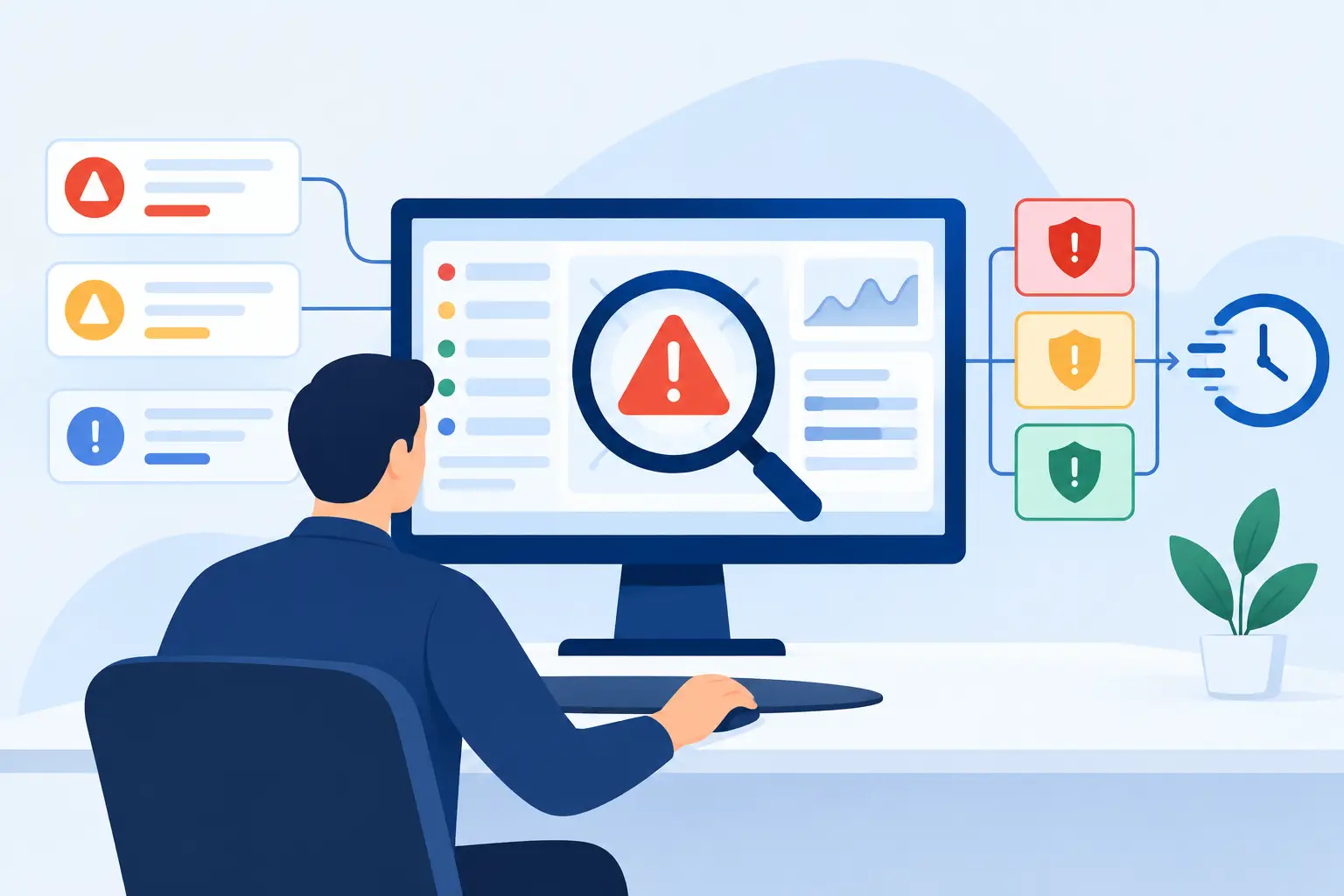
A blurry CCTV frame, a tenant complaint, and an incomplete incident report can create a high-stakes question in minutes: does this person or event require escalation? An incident triage investigation tool helps professional teams turn that uncertainty into a documented, reviewable next step without treating a preliminary match as a final answer.
For security teams, investigators, and property operators, triage is not about producing a name at any cost. It is about separating urgent, actionable signals from weak leads, preserving the evidence behind each decision, and moving the right case to the right person quickly. That requires a workflow built for human review, not an automated conclusion.
What an Incident Triage Investigation Tool Should Do
The strongest tools support the operational sequence teams already follow: collect the available image, assess whether it is usable, search permitted public sources, review confidence-scored results, validate context, and document the outcome. They reduce the time spent switching among disconnected systems while keeping a human in the loop at every consequential point.
This matters because a face image alone is rarely enough to establish identity or intent. CCTV angles, motion blur, poor lighting, partial occlusion, and lookalikes can all affect a result. A useful platform presents candidate signals and the supporting source context so an authorized reviewer can decide whether the information is relevant to an incident.
The right tool also recognizes the difference between investigation and consumer reporting. It should not be positioned as a way to make employment, housing, credit, insurance, or other regulated eligibility decisions. Professional safety workflows need verification, lawful purpose, and documented judgment.
Start With Image Quality, Not Assumptions
Triage begins before any search. Reviewers should select the clearest available frame, crop to the relevant face when appropriate, and retain the original image with the case record. A clean crop can improve review efficiency, but it should not erase the broader scene that may later provide valuable context.
If an image is too low quality to support meaningful comparison, the correct outcome may be “insufficient information.” That is not a failed investigation. It is a defensible finding that prevents a team from overcommitting resources or making an unsupported allegation.
Return Signals That Can Be Examined
An investigation tool should provide more than a bare result. Reviewers need confidence indicators, source references, timestamps where available, and a way to preserve what they saw at the time of review. This helps a supervisor, client, property owner, or law enforcement liaison understand why a case was escalated or closed.
Source context is especially important. A visual similarity signal may be relevant, but the surrounding public post, page, or associated details can show that it is outdated, unrelated, or insufficient to support the proposed lead. The signal starts the review. It does not end it.
A Practical Incident Triage Investigation Tool Workflow
A disciplined workflow makes fast action more reliable. It also protects teams from the common mistake of treating speed as certainty.
First, create a case record with the incident date, location, reporting party, involved footage or images, and the immediate safety concern. Keep the incident facts separate from assumptions. For example, record that an individual entered a restricted loading area at 2:14 a.m., not that the individual intended theft unless evidence supports that conclusion.
Next, upload the best available face photo or CCTV frame for a permitted search. An image-only workflow is useful here because it aligns with how many real incidents begin: an unknown person appears on camera, and the team needs to determine whether there is a credible lead worth reviewing.
Then, assess returned match signals. Compare visible features carefully, review the source material, and note discrepancies. If the source image appears to show a different person, a substantially older image, or a context unrelated to the incident, document that finding and move on. Investigation quality improves when teams are willing to reject a tempting but unsupported lead.
After review, assign an action based on the evidence threshold your organization has set. The appropriate action may be to increase patrol awareness, preserve additional video, contact a client, request a supplemental statement, consult counsel, or refer an urgent threat through the proper channel. In other cases, the correct action is simply to retain the case notes and await more information.
Finally, export an evidence package that preserves the original material, reviewed images, result signals, source references, reviewer notes, and decision history. A good package makes handoffs cleaner and reduces the risk that critical context disappears when a case changes owners.
Where Faster Triage Creates Operational Value
The most immediate value is time. Property managers may need to decide whether a recurring access-control issue is an isolated violation or part of a pattern. Corporate security teams may need to determine whether an individual seen near a sensitive location warrants additional review. Private investigators may need to validate a lead before investing billable hours in fieldwork.
In each case, the objective is not broad surveillance. It is focused verification connected to a defined incident, a legitimate business need, and a documented reviewer decision.
An incident triage process can also improve communication across teams. When a site manager, security director, and outside investigator are looking at different screenshots and informal messages, facts get distorted quickly. A centralized case record gives each participant a common view of the evidence, the review status, and the next authorized action.
SafetyCamAI is designed around this operational need: upload face photos or CCTV frames, review confidence-scored public-source signals, preserve evidence, and escalate appropriately. The platform is built for professional safety and investigation workflows, where a reviewer must validate what the system surfaces before any decision is made.
The Trade-Off Between Speed and Defensibility
Fast tools are valuable, but a faster result is not automatically a better result. Teams should be cautious of workflows that imply certainty from a single image or conceal how a possible match was generated. If a case may lead to removal from a property, a law enforcement report, a client notification, or another high-impact step, the review standard should rise accordingly.
This does not mean every incident needs a lengthy investigation. It means the response should match the risk. A low-confidence, low-impact lead may justify continued observation and evidence preservation. A credible threat with corroborating information may require immediate escalation. The tool should help teams distinguish these scenarios rather than flatten them into one automated outcome.
Build Guardrails Into Daily Use
Clear governance is what turns a search capability into a professional investigation process. Organizations should define who may submit images, what incident types qualify for use, which sources and jurisdictions are permitted, how long case materials are retained, and who can approve escalation.
Reviewers should also be trained to document both positive and negative findings. Recording why a candidate was ruled out is often as valuable as recording why a lead was pursued. It demonstrates that the team considered alternatives and did not rely on a single weak indicator.
Teams should avoid using visual search results as the sole basis for allegations or regulated decisions. Safety and investigation platforms are not consumer reporting agencies, and responsible users do not treat preliminary signals as identity verification without additional validation.
Choosing a Tool That Fits the Case, Not Just the Demo
When evaluating an incident triage investigation tool, look beyond search speed. Ask whether it handles CCTV-driven cases, shows confidence and source context, supports exportable evidence, and gives administrators control over team access. Consider whether it works without a major camera-system integration, especially if your team manages multiple properties or receives footage from clients in different formats.
Also assess the vendor’s posture on responsible use. Compliance language should not be an afterthought. A provider that clearly defines lawful, professional use is more likely to support a workflow your organization can defend under scrutiny.
The best triage process does not promise instant certainty. It gives trained professionals a faster path from an unclear image to a reasoned, documented decision – and the discipline to stop when the evidence does not justify more.