

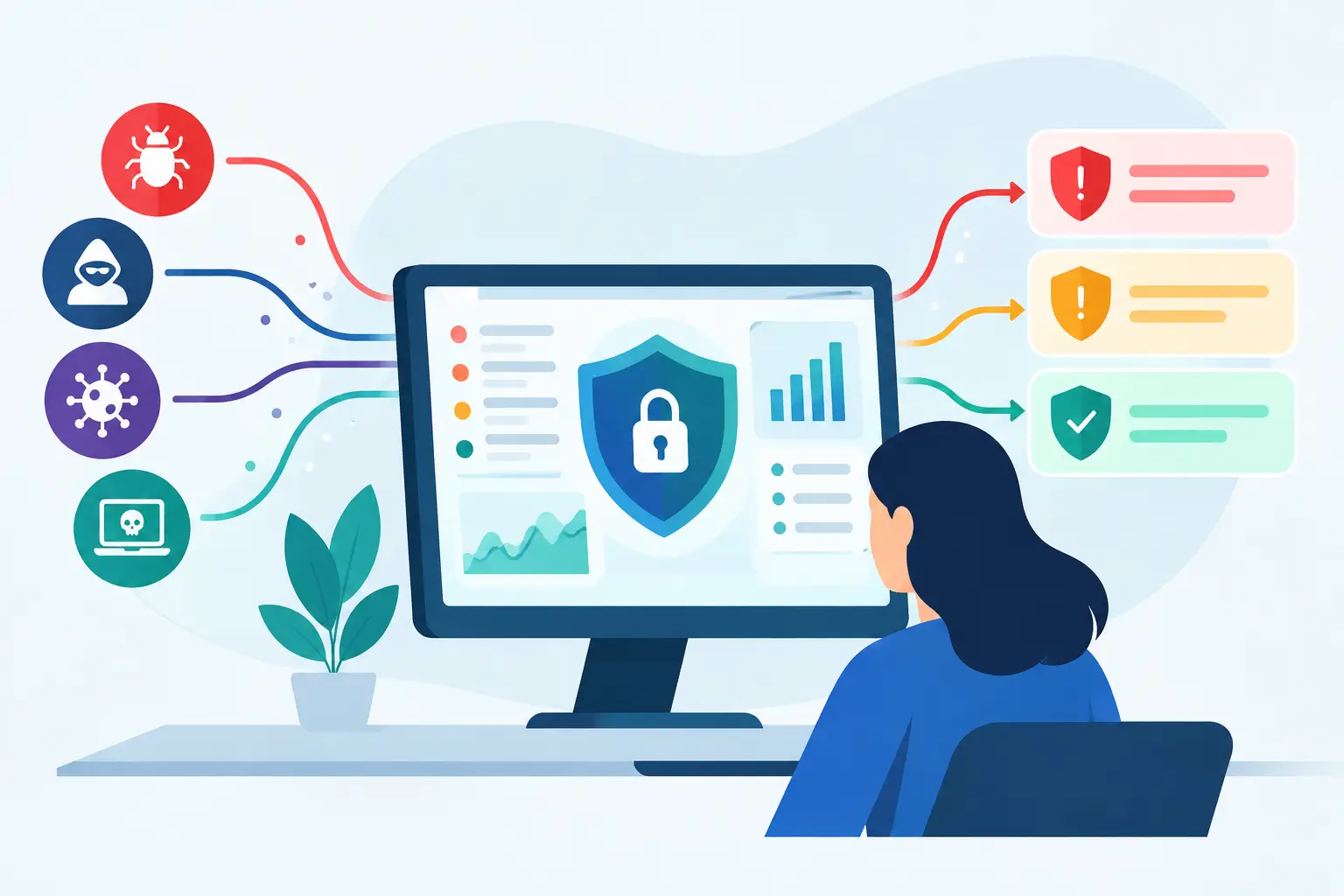
A single unclear CCTV frame can force a property manager or investigator into hours of manual review. The most consequential security intelligence trends are changing that equation. They are not eliminating professional judgment. They are helping teams turn images, alerts, and scattered public information into faster, reviewable safety signals.
For operational teams, the question is no longer whether artificial intelligence can surface a possible match or pattern. The question is whether the signal has enough context, confidence, and documentation to justify the next step. That distinction matters when an incident could lead to a tenant notice, a law enforcement handoff, a restricted-access decision, or an internal case file.
Security Intelligence Trends Are Moving Beyond Detection
Security technology once focused heavily on detection: capture a camera event, receive an alarm, log an access-control exception. Detection remains essential, but it leaves a major gap. Teams still need to determine who or what they are looking at, whether the event is connected to another incident, and whether escalation is warranted.
The current shift is toward intelligence workflows. A useful workflow connects three stages: identify a potential lead, validate the context, and preserve the basis for action. This is especially relevant for organizations handling footage from multiple properties, reviewing suspicious activity after the fact, or working with incomplete visual evidence.
A face match, for example, should be treated as a confidence-scored signal rather than a final identification. Image quality, lighting, camera angle, age of the image, and source reliability can all affect the result. Professional teams need tools that make it possible to inspect the underlying source, compare images, record findings, and decide whether the lead supports additional investigation.
That is the difference between a search result and operational intelligence.
Signal Quality Is Replacing Hit Volume
More alerts do not create more safety. They often create more noise.
Security teams are increasingly measuring the value of intelligence by signal quality: Is the result relevant to the incident? Is the source available for review? Can the finding be documented? Does it help the reviewer make a defensible decision? A platform that returns a large volume of loosely related results may look productive at first, but it can slow triage and increase the chance of confirmation bias.
The stronger model is verification-first. Start with a photo, CCTV frame, or other permitted image. Use AI to surface possible public-source matches. Then keep a human in the loop to assess similarity, source context, timing, and relevance. The machine accelerates the search. The reviewer determines what the signal means.
This approach is particularly valuable when the stakes are high but the evidence is incomplete. A security officer may need to know whether a person seen near a loading dock appears connected to a prior incident. An investigator may need to determine whether an image merits a follow-up interview. A property operations team may need to document repeated trespass concerns without turning a preliminary signal into an unsupported accusation.
Real-Time Monitoring Is Becoming More Targeted
Real-time monitoring is another major development, but its operational value depends on restraint. Continuous scanning without clear policies can overwhelm teams, create unnecessary privacy exposure, and produce alerts that nobody has time to evaluate.
More mature programs focus monitoring on defined safety objectives. That may include reviewing a specific public page tied to an active threat concern, monitoring approved sources during an event, or watching for a known image pattern connected to an open case. The scope should be appropriate to the assignment, authorized by policy, and limited to information the team is permitted to review.
Browser-based monitoring tools are gaining attention because they can fit into existing workflows without requiring a full camera-system replacement. A security analyst can review a permitted public source, receive a possible visual signal, and move directly into a documented review process. For many teams, that is more practical than waiting for a large integration project.
There is a trade-off. Faster monitoring increases the need for clear alert ownership. Every alert should have a responsible reviewer, a defined response path, and a retention policy. If nobody is accountable for reviewing a signal, real-time capability becomes another unattended queue.
Evidence Packaging Is Becoming a Core Requirement
The next trend is less visible than AI matching, but often more important: evidence packaging.
Security findings lose value when they cannot be reconstructed later. A verbal note that says, “possible match found online,” does not give a supervisor, client, legal team, or responding agency enough information to understand what was reviewed. Nor does a screenshot without timestamps, source information, or case context.
Modern intelligence workflows increasingly require exportable, audit-friendly records. At a minimum, teams should be able to preserve the submitted image, the match signal, the relevant source reference, review notes, timestamps, and the decision made. The record should distinguish between what the system surfaced and what the human reviewer concluded.
That distinction protects both the organization and the subject of the review. It prevents a preliminary lead from being presented as a verified fact. It also helps supervisors assess whether escalation was proportional to the available evidence.
For teams managing multiple sites or investigators, standardized evidence packaging improves consistency. A case reviewed at one location should be understandable to a regional security director or outside counsel without relying on the original reviewer’s memory. The best documentation does not merely prove that a search occurred. It shows how the team moved from an initial image to an appropriate operational decision.
Compliance Is Becoming an Intelligence Capability
Compliance is often treated as a limitation imposed after a tool is selected. That is a costly mistake. In professional security work, compliance guardrails should shape the workflow from the beginning.
Face matching, public-source review, and monitoring can raise different obligations depending on jurisdiction, industry, client agreement, use case, and the nature of the decision being considered. Teams should establish who may submit images, which sources may be searched, what cases qualify for review, how long materials are retained, and when legal or executive approval is required.
They should also be clear about prohibited uses. A security intelligence platform is not a substitute for a consumer reporting agency, and it should not be used to make employment, housing, credit, insurance, or other regulated consumer decisions without appropriate legal authority and process. A possible match is not grounds for public identification, punitive action, or an irreversible decision.
These boundaries do not slow good investigations. They focus them. When reviewers know the purpose of a search and the standard for escalation, they can act faster with less ambiguity.
Human Review Will Remain the Control Point
The growing use of AI makes human review more valuable, not less. Automation can rank possible visual matches, flag changes on a monitored page, and organize evidence. It cannot reliably interpret motive, resolve conflicting context, or determine what action is fair and lawful in a specific setting.
A practical human-in-the-loop process asks a reviewer to verify the image comparison, inspect the source material, assess the connection to the incident, and document the rationale for next steps. Depending on the severity of the matter, a second reviewer or supervisor may be appropriate before escalation.
This is also where organizations should train against overreliance. A high confidence score can be useful, but confidence is not certainty. A lower score may still warrant review when the contextual indicators are strong. Teams need written thresholds, but they also need room for professional judgment.
How Security Teams Should Prepare
The most effective response to these trends is not to purchase every new AI capability. It is to build a disciplined triage process around the capabilities that fit the team’s actual risks.
Start by mapping the moments when identification or verification delays create operational problems. This may be after-hours incident review, repeat trespass investigations, threat assessments, fraud-related access events, or suspicious activity across a portfolio. Then define what a useful output looks like: a documented lead for an investigator, an evidence package for a supervisor, or a timely escalation to the appropriate authority.
Next, test the workflow with real but authorized case scenarios. Measure how long it takes to move from image upload to reviewed finding. Check whether the results include inspectable sources and whether another team member can understand the case file without additional explanation. If the process produces more open questions than actionable context, refine the workflow before expanding use.
Finally, assign ownership. Someone should be responsible for policy, reviewer training, case audits, and periodic assessment of false positives, missed signals, and escalation outcomes. Platforms such as SafetyCamAI are most useful when they support this discipline: upload an image, review confidence-scored signals, validate the source context, export evidence, and escalate appropriately.
The teams that gain the most from security intelligence will not be the ones chasing the most data. They will be the ones that can turn a limited, time-sensitive signal into a careful, documented decision when it matters most.