

AI reverse image safety search
Here’s the direct answer: Social Catfish is the “Blockbuster Video” of reverse image search, while SafetyCamAI.com is the “Netflix” equivalent. This isn’t just a catchy comparison—it captures a fundamental shift in how we protect ourselves online.
Think about what Blockbuster represented: driving to a physical store, browsing limited inventory, paying per rental, and returning it later. That’s exactly how traditional reverse image search tools work—you manually upload a picture, pay for a single report, and hope you catch the scammer before they catch you. Netflix changed everything by offering always-on streaming, unlimited access, and personalized recommendations delivered to any device.
The timeline matters here. Blockbuster peaked around 2004 with over 9,000 stores worldwide before filing for bankruptcy in 2010. Netflix launched streaming in 2007 and now serves over 282 million subscribers globally. Similarly, tools like Social Catfish emerged in the 2010s mindset, while SafetyCamAI.com represents the AI-powered, continuous protection model built for 2024 and beyond.
Consider these common scenarios where you need reverse image search:
You match with someone on a dating app and their photos look too professional
A “soldier stationed overseas” sends you a message on Facebook with a perfect headshot
Someone creates fake profiles using photos stolen from your Instagram
The rest of this article breaks down exactly why the Blockbuster model no longer meets modern threats and how the Netflix approach to image safety changes the game.
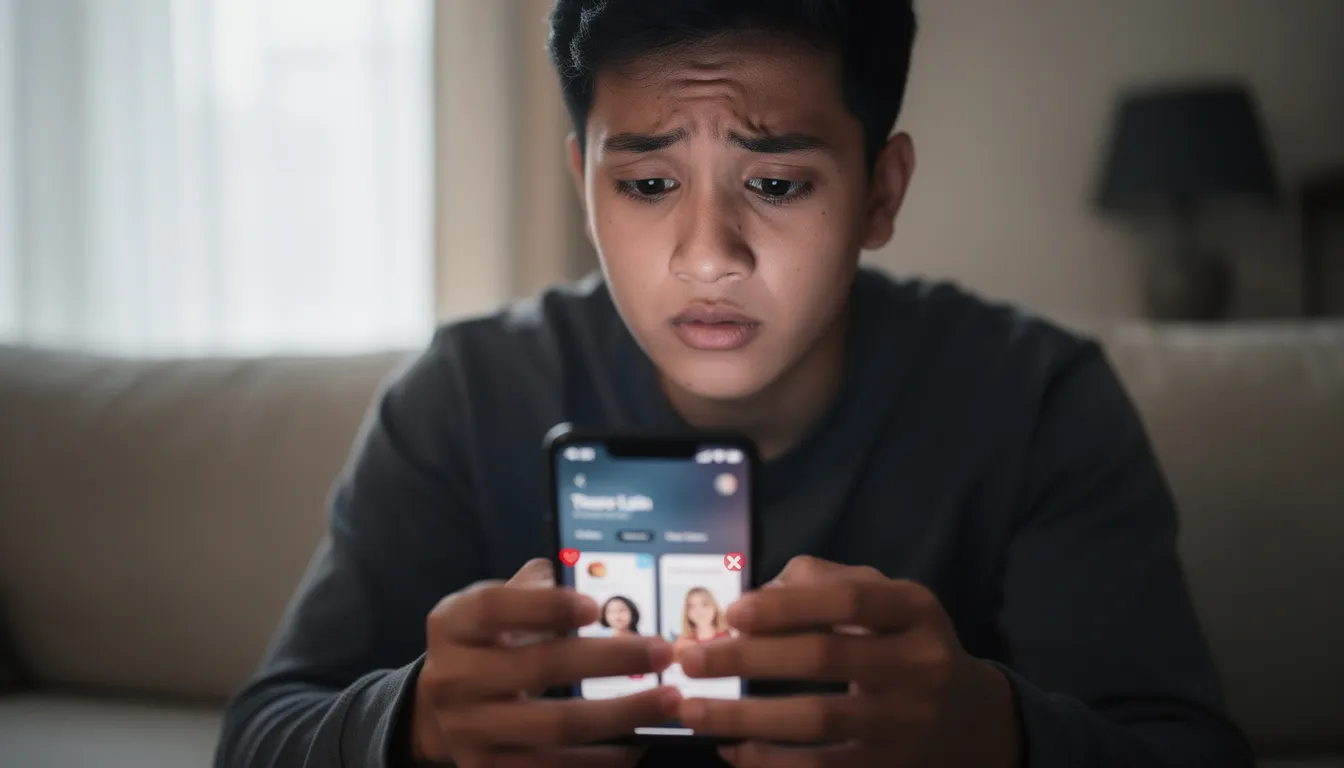
The explosion of online dating between 2015 and 2025 created a perfect hunting ground for scammers targeting lonely individuals seeking love. What started as isolated cases became an industrial-scale fraud operation.
The FTC reported romance scam losses exceeding $1.2 billion annually by 2023, making it one of the most costly fraud categories
Scammers systematically steal photos from Instagram, TikTok, LinkedIn, and dating apps to establish fake profiles that appear genuine
Real people have their photos stolen and used across hundreds of scam profiles simultaneously—some faces appear in thousands of fake accounts worldwide
Lists like the “100 Most Catfished Photos” reveal that certain attractive images get recycled endlessly across the internet
Victims in places like Salt Lake City are just as vulnerable as those in major metros, as scammers operate globally through social media platforms
KSL TV and other local news outlets regularly run stories about lonely individuals who lost their savings to someone who never existed
The romantic relationship these scammers promise is entirely fabricated, designed to extract money through emotional manipulation
Reverse image search became the “lie detector” for profile pictures—the same way caller ID became standard protection for phone calls
Without the ability to perform a quick image search, victims had no tools to verify whether their new online love interest was a real person or a carefully constructed fraud
Traditional reverse image search represents the “drive to the store” experience of online safety. Services like Google Images, TinEye, and Social Catfish’s classic tools require you to take action only when you’re already suspicious—much like driving to Blockbuster only when you wanted to watch something.
Here’s how the Blockbuster model worked, mapped directly to old-school reverse image search:
Drive to the store = Navigate to the search tool and manually upload your image
Browse the shelves = Wait for the system to check its fixed database of indexed photos
Pick one movie = Receive a single report on that specific picture
Pay at the counter = Complete a transaction or use search credits to unlock results
Return it later = The interaction ends; no ongoing relationship exists
Social Catfish operates in this paradigm. You upload a single photo to their search bar, the system checks against millions of social media profiles and websites, and you receive a detailed report. Their Chrome extension earned a 4.6/5 rating from users who found it helpful for verifying dating profiles. But the experience remains fundamentally transactional.
The limitations of this Blockbuster-era approach become clear when you consider modern threats:
No always-on monitoring means you won’t know if your image appears somewhere new tomorrow
No automatic alerts when scammers start using a photo you previously searched
Minimal AI analysis for detecting manipulated or AI generated images
Support hours limited to business times (Social Catfish operates 9 AM-5 PM PST weekdays)
No mobile app means you can’t quickly check someone’s photo from your device while on a date
This approach remains useful for one-time investigations, but it feels like 2005 convenience in a 2025 threat landscape.
Social Catfish functions like Blockbuster in a streaming world: detail-focused but episodic, manual, and designed for one-off transactions rather than continuous protection.
The “pay-per-rental” model translates directly. With Blockbuster, you paid each time you wanted to watch something. With Social Catfish, you typically pay to unlock specific search results or purchase short-term access. There’s no background protection happening when you’re not actively using the service—just like Blockbuster’s shelves sat idle until you walked through the door.
Consider the manual workflow:
User suspects a scam after seeing red flags
User decides to visit the site and run a search
User uploads an image and waits for results
User reads the report and makes a judgment
Nothing happens automatically before or after this interaction
The catalog-versus-streaming distinction matters enormously. Social Catfish pulls from databases that are updated periodically—essentially browsing shelf inventory. They claim to scan millions of social media profiles across Facebook, Instagram, and dating sites, extracting data like location, names, and linked accounts. But this is fundamentally different from a dynamic system that learns and adapts in real-time.
The interface and model were architected in the 2010s mindset. It excels at investigative deep-dives when you already suspect something is wrong. But it wasn’t built natively for:
AI deepfake detection
Live content monitoring
Constant background scanning
AI generated face identification
Concrete example: Someone in 2024 uploads a Tinder profile picture to Social Catfish. They receive a snapshot report showing where that image has appeared online. But two weeks later, when scammers start using that same face in a new crypto fraud scheme, the user gets no alert. They’d have to manually run another search—and pay again—to discover the new threat.

SafetyCamAI.com represents the Netflix-style streaming service for image safety checks—built from the ground up with a mid-2020s AI-first mindset rather than retrofitted legacy architecture.
The subscription model analogy is direct. Instead of isolated, one-time searches, users get ongoing monitoring and tiered access to unlimited scans. It’s the difference between renting one DVD per trip and having an entire content library available whenever you tap your screen.
Here’s what “streaming” looks like for reverse image search:
Continuous scanning: SafetyCamAI.com can periodically re-scan the web for a specific face or image
Automatic notifications: Users receive alerts when their monitored images appear in new profiles or sites
No manual re-uploading: Once you set up monitoring, the system works in the background
Access from any device: Web-based, mobile-friendly, works on your computer or phone
The AI-native capabilities address threats that didn’t exist when older tools were designed:
Detection of AI generated faces that never existed as real people
Identification of deepfake videos and face swaps
Recognition of heavy filters and editing that fool traditional search results
Pattern matching that catches subtle manipulations
Concrete use case: A content creator uploads their headshots to SafetyCamAI.com and sets up monitoring. Three weeks later, they receive an alert that their photos are being used on a dating app in another country to run romance scams. They didn’t have to do anything—the system worked like Netflix auto-playing the next episode, providing continuous protection without manual intervention.
The user experience reflects 2024-2025 realities:
Web-based and fast, no clunky desktop software required
Built for modern threats: romance scams, crypto fraud, OnlyFans impersonation, influencer cloning
Facial recognition tuned for current manipulation techniques
Designed for people who need protection, not just investigation

Understanding the differences between these two approaches helps you choose the right tool for your situation. Here’s how they compare across key dimensions:
Pricing Style
Social Catfish: Transactional, report-based pricing where you pay to unlock individual search results or short-term subscriptions
SafetyCamAI.com: Subscription-based continuous protection with tiered access levels and ongoing monitoring included
Speed and Automation
Social Catfish: Requires manual lookups when you’re already suspicious; you must actively decide to run each search
SafetyCamAI.com: Runs in the background using automation and AI; delivers alerts without requiring user action
Technology Focus
Social Catfish: Database-style matching against indexed photos from public records, social media, and government directories
SafetyCamAI.com: AI/ML-based facial recognition, similarity search, and deepfake detection tuned for 2023-2025 manipulation techniques
Real Scenario Handling
Verifying a new Hinge or Bumble match:
Social Catfish: You screenshot their profile, upload to the site, pay for the report, and read the findings
SafetyCamAI.com: Quick image search with instant AI analysis for synthetic or manipulated faces
Checking if your kid’s images are being misused:
Social Catfish: Manual search each time you’re concerned; no ongoing protection
SafetyCamAI.com: Set up monitoring once, receive alerts whenever those photos appear online
Protecting influencers or business owners from impersonation:
Social Catfish: Periodic manual checks; you discover impersonation only when you actively look
SafetyCamAI.com: Continuous scanning across platforms with automated evidence collection for takedowns
The Blockbuster vs. Netflix imagery holds: going out to rent one DVD versus opening an app that’s always ready with personalized, continuous service.
The catfishing landscape shifted dramatically between 2021 and 2024. Scammers no longer rely solely on photos stolen from real people—they now deploy AI-generated faces, deepfake videos, and entirely synthetic personas that don’t exist in any database.
This evolution breaks traditional reverse image tools. When a scammer uses an AI generated face, there’s no original photo to match against. TinEye’s 68.5 billion indexed images won’t help if the face was created by a neural network last Tuesday. Google Lens and Google image search hit the same wall—they can only find what already exists online.
The new threats require different detection methods:
Pattern recognition: Identifying “too perfect” faces with unnatural symmetry or impossible lighting
Anomaly detection: Spotting artifacts in AI-generated images like distorted ears, weird backgrounds, or inconsistent shadows
Model fingerprinting: Recognizing when images come from the same AI generation tools (certain GAN architectures leave detectable traces)
Behavioral analysis: Flagging profiles that combine AI faces with scripted messaging patterns
Deeptrace Labs reported deepfakes increased 550% since 2023, with romance scams adopting the technology rapidly. A scammer can now generate hundreds of unique faces, create fake profiles across multiple dating apps, and run parallel cons against victims worldwide—all without stealing a single real photo.
Case example: A woman matched with an “investment banker” whose profile picture showed a handsome man in his 40s. Traditional reverse image search found nothing—the image had never appeared online before. An AI-detection tool would have flagged the photo as synthetic, catching the scam before she sent money for his “cryptocurrency opportunity.”
Another scenario: A victim discovered that the “military officer” who’d been messaging her for months used not one but twelve different AI-generated faces across various platforms, each slightly modified to appear unique.
Modern reverse image search must answer two questions:
Where has this photo been used before?
Is this even a real human being?
SafetyCamAI.com’s Netflix-like, AI-first approach addresses both questions. Social Catfish’s Blockbuster-era architecture handles the first reasonably well but struggles fundamentally with the second.
The goal here is simple: equip you with practical steps to use reverse image search effectively, with realistic expectations about what these tools can and cannot reveal.
Common scenarios where you should run a search:
Meeting someone on Tinder, Bumble, Hinge, or Facebook Dating who seems too good to be true
Receiving friend requests from “soldiers stationed overseas” or “international investors”
Getting DMs from supposed celebrities or influencers who want a personal connection
Finding profiles that use only professional-model-quality images without casual photos
Anyone who wants to start a romantic relationship but refuses video chat
Practical checks before sending money or personal info:
Run reverse image search on every profile picture before emotional investment deepens
Insist on live video calls—scammers using stolen photos cannot do this; those using deepfakes often avoid it
Cross-check names, emails, and phone numbers across multiple platforms
Be immediately suspicious of profiles with only polished, professional images and zero candid shots
If they claim to be in a specific location, ask questions only a local would know
Never send money to someone you haven’t met in person, regardless of their stories about emergencies
What “no results” actually means:
Getting no search results from Social Catfish or Google Images doesn’t prove the person is real. It might mean:
The photo is genuinely private and hasn’t appeared elsewhere online
The image is new and hasn’t been indexed yet
The face is AI generated and never existed anywhere
The photo has been edited enough to evade matching algorithms
Absence of evidence is not evidence of authenticity. A clean reverse image search is necessary but not sufficient for trust.
Using SafetyCamAI.com proactively:
Set up monitoring on your own face to catch impersonation before victims contact you
Add your children’s photos to detect unauthorized use on dating sites or elsewhere
Protect brand imagery and professional headshots from scammer exploitation
Receive evidence documentation useful for filing complaints with platforms or law enforcement
Social Catfish pioneered mainstream awareness of reverse image search as a scam-fighting tool, much like Blockbuster popularized movie rentals in the pre-internet era. Both served their purpose well during their respective periods of dominance.
But the threat landscape has fundamentally changed. AI deepfakes, globally distributed scammers, and constant content reposting across social media platforms demand continuous, streaming-style protection. Running a manual search after you’re already suspicious is like driving to a video store in 2025—technically possible but hopelessly outdated.
The victims who lose the most money are often those who trusted their instincts without verification, or who performed a single search and assumed they were safe. Modern protection requires thinking of reverse image search as a regular safety subscription, not a one-time emergency button you press when something feels wrong.
As scams evolve through 2025 and beyond, tools that feel like Netflix—on-demand, automated, AI-powered, and always watching—will give users the best chance to protect themselves. The scammers have already upgraded their technology. The question is whether your defenses have kept pace.
Don’t wait until you’re already a victim. Set up continuous monitoring and make reverse image search part of your regular online safety routine.
SafetyCamAI is proudly powered by WordPress
“I had clear photos of the person who robbed me. It still wasn’t enough.”
After 23 years as a cybersecurity specialist, our founder was robbed at gunpoint during an online-marketplace meetup. He had clear photographs of the person who did it — and still, no arrest was ever made. The images sat useless while the trail went cold.
SafetyCamAI is the tool he wishes he’d had that day: a way to turn a single clear photo into real match signals from public sources, in seconds — so security teams, investigators, and everyday people can act before a face disappears into the crowd.
Run your first verifications free. No credit card required. Results in 5 seconds.
Try SafetyCamAI free — upload a photo, get results in seconds
Upload any photo and get real-time match signals in under 60 seconds. No credit card, no signup required.
Try Free Lookup Now →