

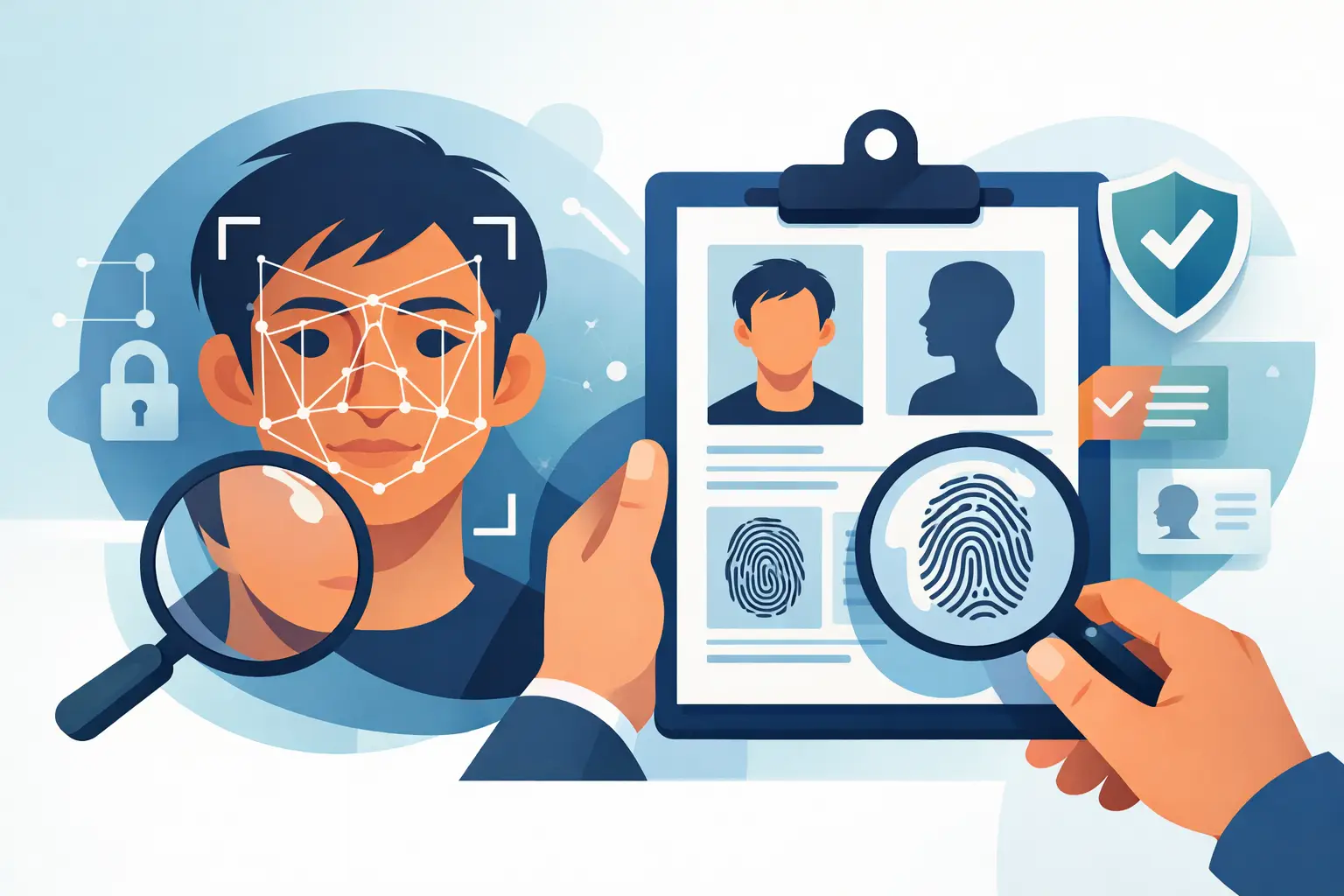
A possible match is not a finding. A screenshot with a name typed beside it is not evidence. When a CCTV frame, incident photo, or public-source image creates a safety concern, facial match documentation is what turns a fast signal into a reviewable, defensible record.
For security teams, investigators, and property operators, the goal is not to claim certainty from a single image. The goal is to preserve what was reviewed, show how the conclusion was reached, and give the next decision-maker enough context to act appropriately. That discipline protects people, strengthens incident response, and keeps a useful lead from becoming an unsupported allegation.
Why Facial Match Documentation Matters
Operational teams often work under pressure. A resident reports a suspicious person near a controlled-access door. A security officer exports a blurry frame after an incident. An investigator needs to determine whether a photo deserves escalation before more time and resources are assigned.
A facial match tool can surface confidence-scored match signals quickly, but speed creates a second responsibility: documenting the verification process. Without a clear record, teams can lose the original image, mix up dates, overlook source context, or present an algorithmic signal as a confirmed identity.
Good documentation establishes three things: what was observed, what sources were reviewed, and what a trained human decided after review. It also creates continuity when an investigation moves from an onsite team to corporate security, outside counsel, law enforcement, or a client.
The standard is not a perfect file for every low-risk observation. It is documentation proportional to the potential impact of the decision. A routine internal triage note may be brief. A decision that affects access, a tenant interaction, a security response, or a formal referral requires far more care.
Build the Record From the Original Image
The evidence package should begin before any search occurs. Save the original submitted image or CCTV frame in its original form whenever possible. If footage is exported, record the camera identifier, location, date, time, time zone, and the person who created the export.
Do not replace the original with a cropped, brightened, or annotated version. Enhancements can be useful for review, but they should be clearly labeled as derivative working images. Keep them alongside the original so another reviewer can understand what was changed and why.
Image quality directly affects match reliability. Low resolution, poor lighting, motion blur, an extreme head angle, sunglasses, masks, and partial obstruction can all reduce confidence. State those limitations in the record. A note such as “face partially obscured by cap brim; image used for lead generation only” is far more credible than treating a weak frame as conclusive.
Capture the incident context
A face image has limited value without the operational context around it. Record the incident or case number, reporting party, location, reason for review, and the observed conduct that prompted the search. Keep this factual. Describe actions, timing, and relevant identifiers rather than assumptions about intent.
For example, “individual entered a restricted loading area at 2:14 a.m. and attempted two door handles” is useful. “Known trespasser” is not, unless that status has already been verified and documented elsewhere.
This distinction matters because the facial match workflow should support investigation, not replace it. The image can help establish a lead. The incident facts establish why the lead was reviewed.
What Facial Match Documentation Should Preserve
The strongest record follows the workflow: upload, match, review, act. It does not need to become a lengthy narrative every time, but it should preserve the details needed for independent review.
At minimum, a case file should identify the original image and its source; the date and time of the search; the authorized user who performed it; the search result or confidence-scored signal; and the public source material reviewed. Preserve source URLs or source references in the export, plus screenshots or capture records where permitted by policy.
The file should also include the reviewer’s assessment. Did visible features align across images? Was there a meaningful difference in age, facial hair, hairstyle, body build, location, or time period? Was the source current enough to matter? A match signal without this human assessment is incomplete.
Finally, document the action taken. That may be “no escalation,” “continue monitoring,” “share with site security for awareness,” “request additional footage,” or “refer for lawful follow-up.” The action should match the confidence level and the risk at hand.
SafetyCamAI is designed for this kind of verification-first workflow: image-based search signals, source-linked review, and exportable evidence that supports a human-in-the-loop decision. The platform is not a consumer reporting agency, and a match signal should not be treated as a background report, eligibility determination, or automatic decision.
Separate a Lead From a Verified Finding
This is where many incident files fail. A possible visual similarity can become “the person” after it is repeated in an email thread or shift report. That language drift creates risk.
Use clear status labels in the documentation. A “candidate lead” means a result warrants additional review. A “corroborated lead” means the image signal is supported by independent facts, such as matching location, known association, a verified social post, witness information, or additional footage. A “verified finding” should be reserved for situations where your organization has sufficient independent evidence and the authority to make that determination.
The language in the record should reflect the status. Say “possible visual match identified for review,” not “identity confirmed,” unless confirmation is supported by more than the tool output. When uncertainty remains, write it down. Acknowledging uncertainty is not a weakness. It shows that the reviewer understood the limits of the evidence.
Use a second reviewer for higher-impact cases
A second review is especially valuable when image quality is poor, the result could affect an individual’s access or treatment, or the matter may be escalated outside the organization. The second reviewer should see the original image, the candidate source image, the source context, and the first reviewer’s notes.
They should not simply approve a name. Ask whether the images are sufficiently comparable, whether alternative explanations were considered, and whether the proposed action is proportionate. If reviewers disagree, preserve that disagreement and seek more evidence rather than forcing a conclusion.
Make Exports Useful to the Next Team
An evidence export should answer practical questions in minutes, not force the next reviewer to reconstruct the case from scattered files. Organize the package around a simple chain: incident context, original image, search activity, candidate sources, reviewer analysis, and action taken.
Use consistent file names that connect the evidence to the case number and date. Keep access limited to authorized personnel, particularly when records include surveillance images, sensitive incident details, or personal data from public sources. Maintain retention and deletion practices that fit your legal obligations, client commitments, and internal policies.
Avoid over-collection. Save the material needed to explain the decision and preserve the chain of review, not every unrelated item returned during a search. Less irrelevant material makes the file easier to audit and reduces unnecessary privacy exposure.
If the matter is handed off, document who received it, when it was transferred, and what the receiving party was told. A good handoff note distinguishes facts from leads and states any limitations directly. For example: “Public-source candidate reviewed by two analysts. Visual similarity noted, but original CCTV frame is low resolution. No identity confirmation made. Further verification required before action.”
Set Boundaries Before the Incident Happens
Documentation quality depends on policy, not just individual care. Teams should define who may perform facial matching, what incident types justify use, which public sources may be reviewed, who can access exports, and when a supervisor or second reviewer is required.
The policy should also prohibit uses that fall outside the organization’s lawful, authorized purpose. Facial matching should not be used for curiosity, personal disputes, discrimination, or consumer-reporting decisions. It should operate in a public-interest lane with a legitimate safety, investigation, verification, or risk-review purpose.
Training matters as much as the policy. Reviewers need to know that confidence scores are signals, not declarations of identity. They need to recognize image-quality limits, preserve source context, and write notes that another professional can understand months later.
The most useful documentation does not make every case look certain. It makes the review process visible. When a real safety decision needs to be made, that visibility gives your team a firmer basis to investigate further, escalate appropriately, or decide that the evidence does not support action.