

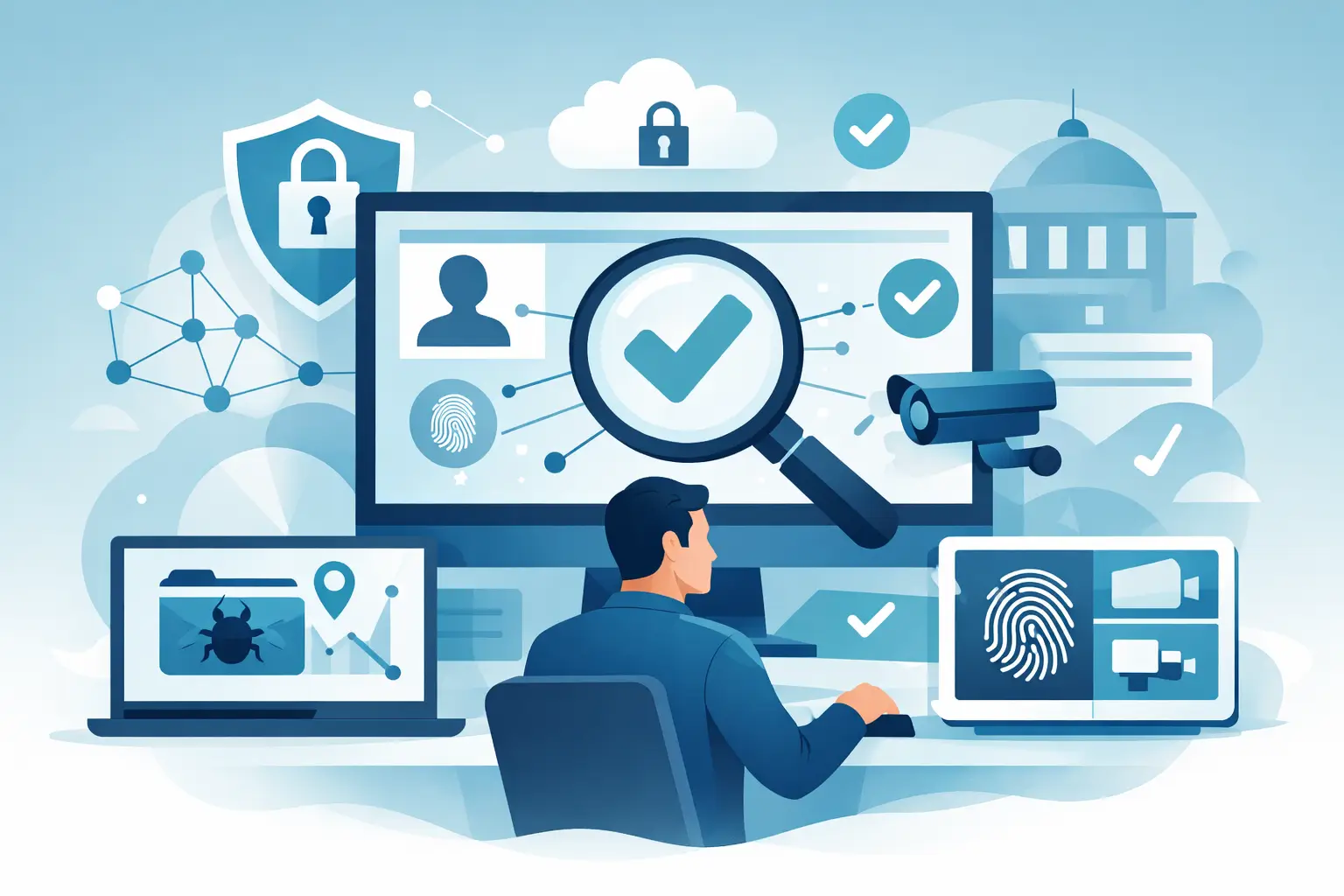
A blurry face pulled from hallway CCTV is not a lead. A tagged social post is not proof. And a name scraped from a generic people-search site is not something a professional team can safely act on without review. That is where security investigations software earns its place – not by flooding teams with noise, but by helping them verify people faster, package evidence cleanly, and escalate appropriately.
For property managers, investigators, and security teams, the real problem is rarely lack of data. It is lack of defensible signal. You already have photos, camera stills, incident reports, witness statements, and scattered online context. What you need is a workflow that turns that material into something operational: a confidence-scored match, source context, and documentation a supervisor or client can actually review.
What security investigations software should actually do
The best platforms are built around triage, not curiosity. They help a professional user answer a narrow but urgent question: does this image, person, or incident warrant further action? That sounds simple, but the difference between useful software and risky software sits in the details.
A strong system should let a team upload a face photo or CCTV frame, search permitted public sources, and return possible matches with enough context to assess whether the result is credible. Just as important, it should preserve the review process. Human in the loop matters because confidence scores are not conclusions. They are signals that help an investigator decide whether to keep going, pause, or escalate.
This is also why generic consumer tools often fail in professional settings. They tend to mix identity hints, stale records, and loosely connected profiles into a single output that looks decisive when it is not. In a security workflow, that creates risk. A tool used for incident review needs to support verification-first decisions, not encourage shortcuts.
Why verification matters more than volume
Many teams assume more data means better investigations. In practice, more data often means more cleanup. If ten weak matches appear with no source transparency, the user still has to do the hard part manually. If one or two higher-confidence signals are paired with source links and exportable evidence, the path forward becomes much clearer.
That distinction matters in real environments. A multifamily property manager reviewing trespass concerns after hours does not need a sprawling identity dossier. They need to know whether the person in the lobby footage appears tied to prior tagged public content, whether the source context is plausible, and whether the finding should be handed to internal leadership or outside counsel. A corporate security analyst handling a workplace incident needs the same discipline. Speed matters, but not at the expense of documentation or lawful use.
Security investigations software should reduce ambiguity, not disguise it. The right platform makes uncertainty visible. It shows confidence levels, preserves source context, and supports evidence exports so the next reviewer can understand how a finding was reached.
The workflows that matter most
In most professional settings, investigations software has to fit around existing work, not force a whole new stack. That is especially true for teams using mixed camera systems, emailed incident reports, and manual review queues.
CCTV and image-led investigation
This is where many platforms either become useful or irrelevant. Security teams often start with a single frame from a camera, a phone capture from a front desk team member, or a screenshot from a social post. If the software is built for clean, studio-quality images only, it breaks down fast.
Image-led investigation tools need to work with imperfect inputs. They should support cropped faces, variable lighting, and operational urgency. That does not mean every image will produce a match. It means the system should help users get to a reasonable next step quickly, whether that is reviewing possible matches, rejecting weak results, or saving the case for follow-up when more footage becomes available.
Incident triage and escalation
Not every case becomes a formal investigation. Many start as a quick validation request: Is this person known? Does this image connect to a credible public source? Is there enough here to notify management, security leadership, or law enforcement?
Good security investigations software supports that middle space between raw suspicion and full escalation. It helps teams separate routine noise from incidents that deserve attention. That saves time, but it also supports consistency. When every reviewer follows the same basic path – upload, assess, document, act – the organization is less exposed to impulsive decisions.
Evidence packaging for review
This is one of the most overlooked features in the category. Getting a result is not the same as documenting a result. If a platform cannot export the match signal, source references, timestamps, and supporting screenshots in a format others can review, then the value stays trapped in the tool.
For professional users, evidence packaging is part of the product, not an add-on. Supervisors need it. Clients need it. Internal case files need it. And if an incident later receives legal or regulatory scrutiny, a clean record matters far more than a flashy interface.
What to look for in security investigations software
The market is crowded with products that promise intelligence but deliver convenience-grade search. Professional buyers should be more demanding.
First, look at the source model. If the platform cannot clearly explain where signals come from, how they are presented, and what limitations apply, that is a problem. Transparency is not a marketing extra. It is part of operational trust.
Second, look at how the software handles review. Systems that present matches as certainty create bad habits. Systems that frame them as confidence-scored signals support better judgment. That language matters because it shapes how teams act under pressure.
Third, look at documentation. A useful platform should make it easy to preserve findings, export evidence, and hand off a case without losing context. If the workflow ends with a screenshot pasted into an email, the tool is not doing enough.
Fourth, consider whether the software fits your actual environment. A private investigator may need fast self-serve searches and case exports. A property operations group may need multi-site access and simple onboarding. A corporate team may need monitoring workflows, shared review standards, and audit-friendly records. The right answer depends on use case, volume, and who has to review the result after the initial search.
Compliance is not a side note
For serious teams, this is not optional. Security investigations software sits close to sensitive decisions, which means the compliance posture of the platform matters as much as its search capability.
A disciplined provider should be explicit about boundaries. Public-interest lane, human in the loop, and not a consumer reporting agency are not throwaway phrases. They signal that the product is designed for verification and incident review, not for automated eligibility decisions or broad consumer profiling.
That distinction protects users. It reminds teams that a match result is a lead to evaluate, not an outcome to impose. It also keeps the workflow aligned with lawful use. If your organization cannot explain why a search was run, what sources were reviewed, who validated the result, and how the evidence was stored, the software may be creating exposure instead of reducing it.
This is one reason compliance-conscious platforms stand apart. They do not just help users move faster. They help them move in a way that can be defended later.
Where the category is headed
The next phase of this market will favor tools that are more operational and less theatrical. Buyers are getting smarter. They want systems that can work from CCTV frames, support screen-based monitoring when needed, package evidence for escalation, and stay usable without massive integration work.
They also want clarity. The winning products will not pretend AI replaces professional judgment. They will use AI to surface possible matches, organize evidence, and reduce manual searching while keeping the reviewer in control. That balance is where trust comes from.
SafetyCamAI fits this shift because it is built around verification-first image workflows rather than generic people-search behavior. That difference matters when the goal is to assess a real incident, not browse for identity trivia.
If you are evaluating software in this category, the test is simple: after a search runs, are you closer to a defensible decision or just staring at more noise? The right tool should help your team verify faster, document cleanly, and act with restraint when restraint is what the case requires. That is what professionals need when the footage is grainy, the timeline is tight, and the next step has to hold up under review.