

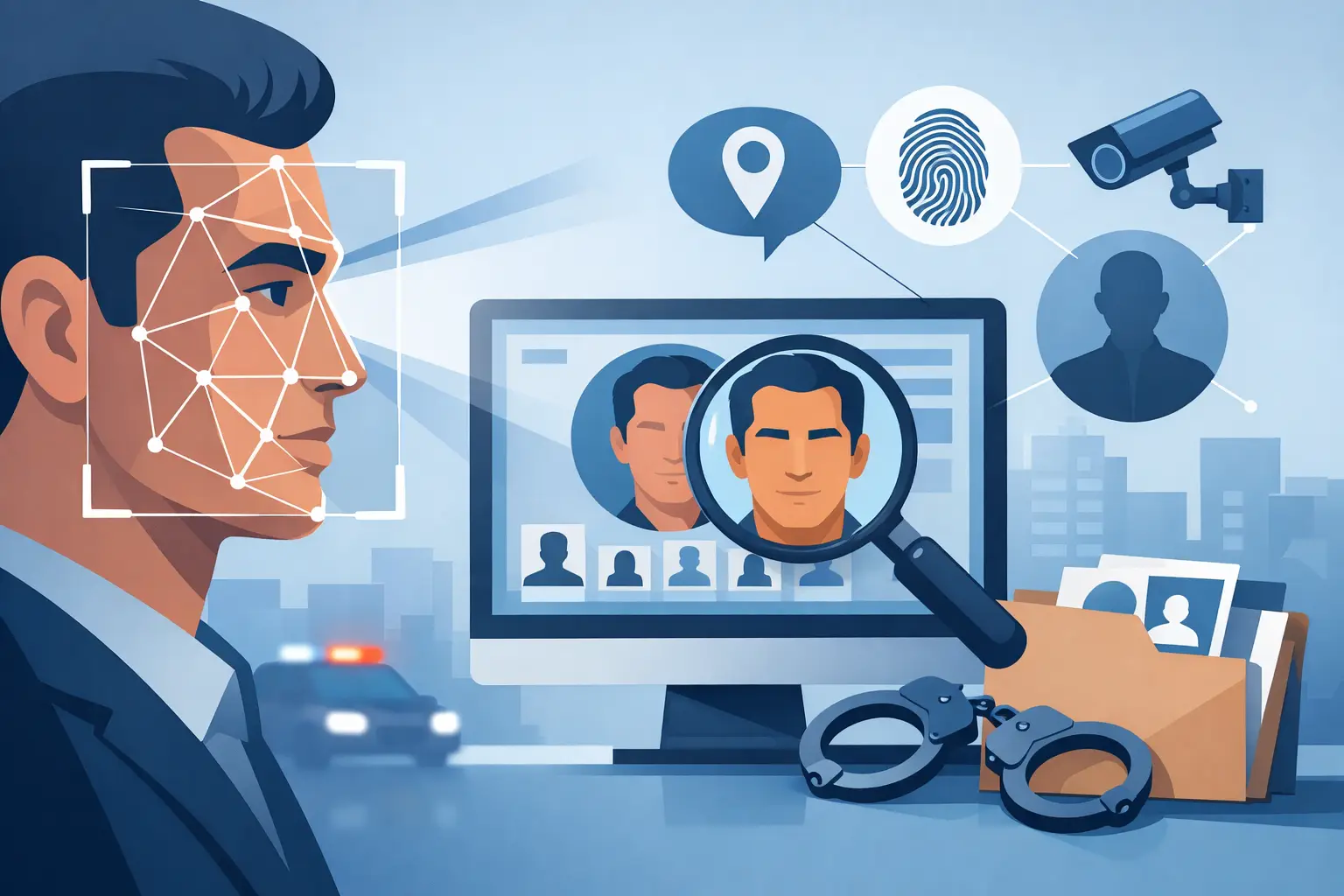
A blurry face on a lobby camera rarely arrives with context. What matters is whether your team can turn that frame into a defensible lead quickly, without overreaching, contaminating the file, or sending staff down the wrong path. That is where visual image-matching for investigations earns its place – not as an automatic answer, but as a fast verification layer inside a disciplined workflow.
For investigators, security teams, and property operators, the real value is speed with boundaries. You need to know whether the person in a still image may connect to prior incidents, public-facing profiles, or other relevant signals that justify escalation. You also need to know when the result is too weak to act on. Those two needs belong together.
What visual image-matching for investigations is actually for
There is a tendency to talk about face search as if it replaces investigative judgment. It does not. In operational settings, the job is narrower and more useful: compare an uploaded photo or CCTV frame against permitted public sources, surface possible matches, score confidence, and give the reviewer enough source material to verify or reject the lead.
That distinction matters because investigations are rarely solved by a single match. A face-based result might help identify a repeat trespasser at a property, connect a suspicious individual to a public profile used in prior harassment, or help a corporate security team move from “unknown subject” to “review warranted.” It is a triage tool. Used correctly, it narrows attention. Used carelessly, it creates noise and risk.
The strongest teams treat face matching as one signal among several. Time stamp, location, clothing, vehicle details, witness statements, access logs, and prior incident patterns still matter. visual image-matching speeds up the verification step, but the decision to act should remain human in the loop.
Why investigators are using image-first workflows
A lot of legacy search tools were not built for CCTV-driven work. They assume you start with a full name, phone number, or email address. In many real incidents, you have none of that. You have a screen capture from a hallway camera, a phone photo from a front desk, or a social image tied to a threat report.
That is why image-first systems are gaining traction in investigations. They let teams start with the evidence they already have. Instead of forcing staff to guess at identity details, they begin with the face itself, then return candidate matches and source links that can be reviewed. This is more practical for apartment managers handling repeated access issues, private investigators working from surveillance stills, and corporate security teams reviewing internal incidents.
The workflow is straightforward: upload the clearest available image, review confidence-scored candidates, inspect the underlying source pages, and export the findings into the case file. The speed matters, but the audit trail matters just as much. If a lead turns into an escalation, you need to show what was found, where it came from, and how the result was validated.
Where visual image-matching for investigations helps most
The strongest use cases are the ones where time, uncertainty, and documentation pressure all collide.
Property teams often face recurring unknown-person incidents – tailgating, package theft, vandalism, unauthorized entry, or a banned individual reappearing on site. A photo from CCTV can help determine whether the same subject has a public-facing footprint that supports internal review or authorized professionals handoff.
Private investigators use face search to validate whether a person in surveillance footage aligns with known online images tied to a case. The goal is not to declare identity from a single output. The goal is to produce a reviewable lead faster than manual searching would allow.
Corporate security and workplace safety teams use it during incident triage. If threatening behavior, stalking concerns, or suspicious appearances occur near staff or facilities, a face-based search can help determine whether there is enough publicly available context to increase monitoring, notify leadership, or preserve evidence for external escalation.
In each scenario, the technology is most useful when the question is practical: Does this image produce enough verified signal to justify the next step?
Accuracy is not the only standard
When buyers evaluate face matching tools, they usually ask about accuracy first. That is reasonable, but operationally incomplete. A strong investigative workflow depends on image quality, confidence scoring, source transparency, and reviewer discipline just as much as model performance.
A clean, front-facing image with decent lighting can produce useful candidates quickly. A low-angle frame from an exterior camera at night may not. Some tools still return something in both cases, which is exactly why confidence scores and source review are essential. A low-confidence result with weak source context should slow you down, not push you forward.
This is one of the biggest trade-offs in visual image-matching for investigations. Speed is valuable, but false certainty is expensive. It can waste hours, create internal confusion, and expose teams to unnecessary legal or reputational risk. The better approach is verification-first: treat the match result as a lead, inspect the supporting sources, compare facial features manually, and document why the lead was accepted, rejected, or left unresolved.
That standard is especially important in professional environments where files may be reviewed later by clients, managers, counsel, or authorized professionals. If your team cannot explain how a match was reached, you do not have a strong result. You have a fragile one.
Compliance guardrails are part of the product, not a footnote
Face-based investigation tools live in a sensitive category. That means the platform and the process both need guardrails.
Professional users should look for systems designed around lawful use, public-interest workflows, and clear restrictions on consumer-style screening. That includes understanding what sources are searched, what data is returned, how evidence is stored, and whether the platform is built for verification rather than broad profiling. It also means recognizing what the tool is not. A platform used for investigative verification should not be treated like a consumer reporting product, and match outputs should not become automatic decision engines.
This is where disciplined vendors separate themselves from generic people-search products. A serious investigative platform is built for operational review, not curiosity. It supports human oversight, preserves source context, and helps teams package findings responsibly. If a vendor is vague about these boundaries, that is a warning sign.
What a defensible workflow looks like
The most effective teams build face search into a repeatable chain of review. They do not rely on memory, screenshots scattered across folders, or informal judgments made in chat.
Start with the best available image. Crop carefully, avoid overediting, and preserve the original frame. Review the returned candidates in order, but do not assume rank equals truth. Open the source context, compare features manually, and cross-check against the known facts of the incident. If the result supports escalation, preserve the source links and export a clean evidence package with notes.
If the result is inconclusive, say so. That is not a failure. It is a compliant outcome. Investigations go off track when teams force a positive identification from weak material. A disciplined “not enough to act” decision protects the case and the organization.
Tools that support upload, match, act workflows tend to fit this reality better because they reduce friction at the exact moments where investigators lose time: image intake, source review, and evidence packaging. SafetyCamAI is built around that operational model, with human-in-the-loop review and documentation practices suited to CCTV and verification-driven use cases.
How to evaluate a platform for investigative use
The right question is not simply whether a tool can find faces. Many can. The question is whether it helps your team verify people faster while preserving judgment, documentation, and responsible-use boundaries.
Look closely at the source transparency. If you cannot inspect where a candidate came from, the output is harder to trust. Review whether the platform gives confidence signals rather than binary claims. Check whether it supports exports that can be handed off internally or preserved for escalation. And pay attention to workflow fit. Investigators and security operators need something that works with CCTV frames, social screenshots, and incident photos, not just ideal portraits.
It also helps to ask what happens after the search. Can the result move cleanly into a case note, incident file, or supervisor review? Can multiple sites or team members work from the same process? Those details affect whether the tool becomes part of daily operations or just another tab that people stop using.
visual image-matching belongs in investigations when it sharpens triage, shortens time to verified leads, and produces evidence that stands up to review. The technology is useful because it can move fast. It becomes valuable when your team knows exactly when to trust it, when to question it, and when to stop.
Responsible Use & Disclaimer: SafetyCamAI is a reverse-image / visual similarity search tool. It finds visually similar images from publicly accessible sources for informational purposes only. It does not identify individuals, verify identities, confirm criminal history, or provide arrest or background-check information. Results must not be used for employment, housing, credit, or any FCRA-covered purpose. Always use the app lawfully and ethically.