

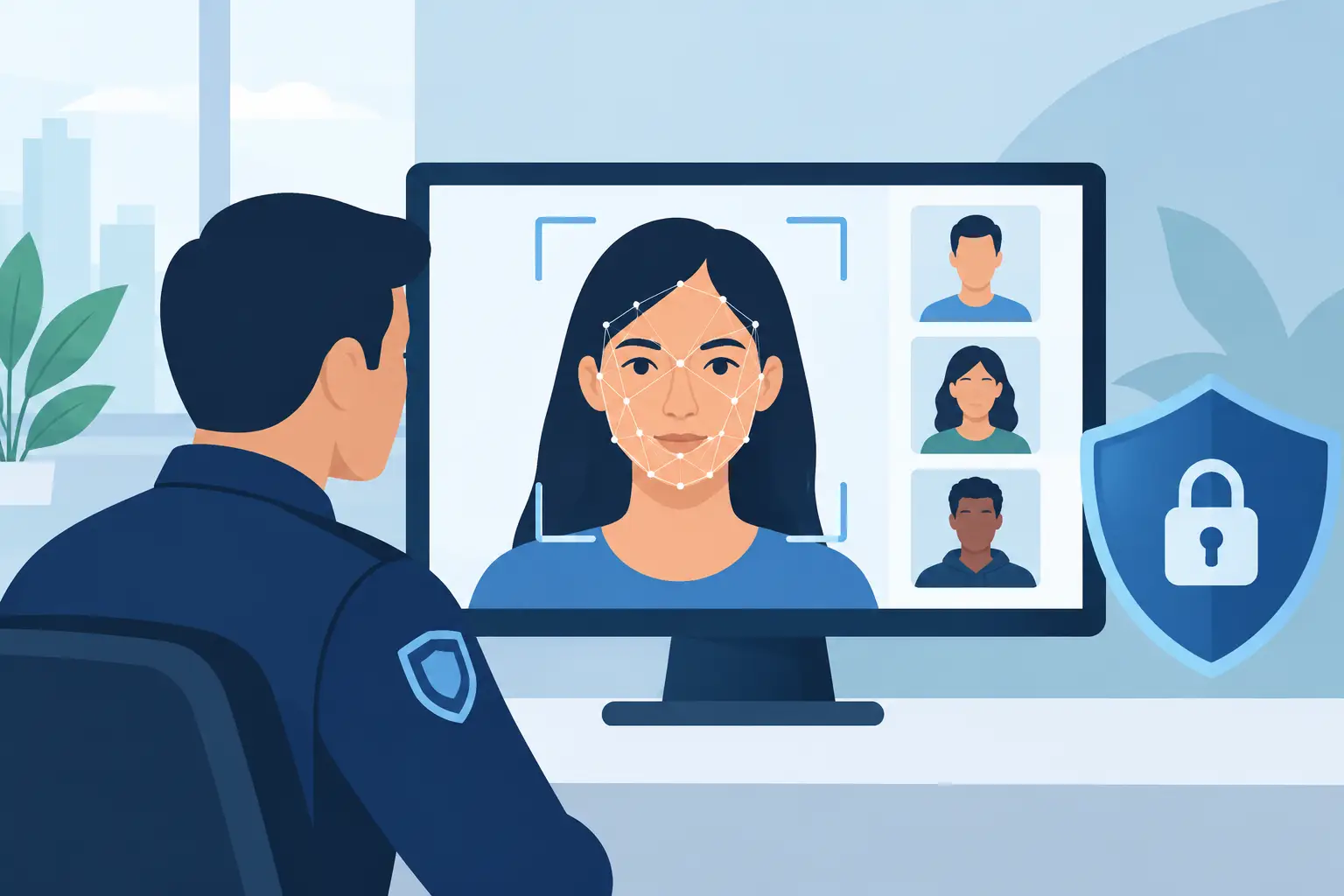
A blurry CCTV still should not force a security team into guesswork, expensive manual research, or an unsupported accusation. The best facial matching platforms help professionals turn a permitted image into a lead that can be reviewed, validated, documented, and escalated appropriately. They do not replace investigator judgment. They make that judgment faster and better supported.
For private investigators, corporate security teams, and property operators, the right platform is less about a dramatic match claim and more about operational fit. Can it handle a low-quality frame? Does it show where a possible match came from? Can the team preserve findings for an incident report? Does the provider set clear boundaries around lawful use? Those questions separate a useful safety tool from a risky shortcut.
What Makes a Facial Matching Platform Worth Using?
Facial matching is often discussed as a single capability, but professional workflows require more than image comparison. A useful platform must support the full path from intake to review to evidence handling.
First, image quality matters. Security teams rarely receive a clean, front-facing headshot. They receive frames pulled from lobby cameras, parking lots, package rooms, access points, and mobile devices. The platform should make the most of partial, compressed, poorly lit, or off-angle images while clearly communicating when the available image is too weak for a reliable signal.
Second, the result must be interpretable. A confidence score can help prioritize review, but it is not a verdict. Strong platforms provide match candidates alongside source context so a human reviewer can compare facial features, timing, location clues, and other available facts. A score without context invites overreliance. Context gives an investigator something to verify.
Third, evidence needs to survive handoff. A property manager may need to share a documented finding with corporate security. A security director may need to brief counsel, law enforcement, or an insurer. The best tools support exportable records that show the submitted image, candidate signals, relevant source information, review notes, and timestamps.
Finally, compliance cannot be an afterthought. Facial matching should operate in a permitted public-interest lane, with clear policies for authorized users and legitimate safety, investigative, and verification purposes. A platform that treats every image as a consumer lookup request creates unnecessary risk for the professionals using it.
Best Facial Matching Platforms: Four Categories to Compare
There is no universal winner because the right platform depends on the job. Most options fall into four categories, each with a distinct operating model and trade-off.
1. General reverse image search tools
General reverse image search tools are familiar, easy to test, and sometimes helpful for finding reposted photos or visually similar images. They can provide a quick first pass when the image is clear and likely to have appeared on broadly indexed pages.
Their limitation is precision. These tools are not designed around face-specific verification workflows, CCTV frames, evidence packaging, or security escalation. Results may emphasize visually similar scenes, duplicate images, or unrelated content. For an investigator who needs to document why a result matters, generic image search can create more noise than usable signal.
2. Consumer people-search services
Consumer people-search subscriptions generally start with a name, phone number, address, or email. Some present identity records, contact details, or possible associates in a simple interface. They can be useful for limited background research after a person has already been identified through legitimate means.
They are a poor fit when the starting point is an unknown person in a camera frame. They are also not a substitute for image-based verification. Teams should be especially careful with services that blur the line between casual lookup and employment, housing, insurance, credit, or other regulated decision-making. A match lead should never become an adverse action without appropriate validation and legal review.
3. Enterprise biometric and access-control systems
Enterprise biometric systems are typically built for large organizations with controlled watchlists, owned cameras, substantial IT resources, and formal governance programs. They may support real-time alerting across a camera estate, enrollment management, access control, and detailed administration.
For organizations with those requirements, this category can be appropriate. The trade-off is cost, deployment time, system complexity, and integration work. A multi-property operator or investigator who needs to review individual photos and CCTV frames may not need a major camera-system rollout to establish whether an incident merits escalation.
4. Verification-first facial matching platforms
Verification-first platforms are designed for the operational middle ground: a professional has a photo or CCTV still, needs a fast lead, and must decide what to do next. The workflow should be direct: upload the image, review confidence-scored match signals, inspect source context, document the finding, and escalate only after human review.
This model is particularly useful when teams need flexibility without a major hardware commitment. SafetyCamAI, for example, is positioned for image-only searches, screen-based monitoring, and audit-friendly evidence packaging rather than consumer reporting. That distinction matters when the work begins with a real incident, not a name-based lookup.
Evaluate the Workflow, Not Just the Match Rate
A platform can advertise impressive performance and still fail the operational test. Before adopting any facial matching tool, examine how it behaves when the image is imperfect, the stakes are high, and multiple people need to review the same case.
Can it work with actual CCTV evidence?
Ask what happens with common camera limitations: motion blur, shadows, hats, glasses, profile angles, compression, and low resolution. No technology can create detail that does not exist. A responsible platform should help users identify when a submitted frame is unsuitable and encourage the selection of the clearest available image.
Teams should also establish an intake practice. Preserve the original file, record where it came from, note the date and camera location, and retain the unedited frame. If a cropped version is used for matching, keep both versions. This protects context and makes later review more defensible.
Does it support human-in-the-loop review?
The platform should make it difficult to confuse a possible match with confirmed identity. Look for confidence scoring, candidate comparison, visible source information, and a process for recording why a reviewer accepted, rejected, or held a lead for more investigation.
A practical internal rule is simple: treat every result as an investigative signal. Confirm with independent facts where possible, such as incident timing, authorized-access records, witness statements, known affiliations, or other lawful evidence. The higher the consequence of a decision, the more independent validation is required.
Can you document and share the result?
A screenshot of a search page is not a complete case record. It may omit when the search occurred, what image was used, what source was reviewed, and whether the result was tentative. Choose a platform that helps create a clear evidence package for internal reporting and appropriate external handoffs.
This is especially relevant for property operations. When a trespass incident, theft concern, or repeated access violation moves from on-site staff to regional leadership, a documented chain of review reduces confusion. It also keeps the team focused on observable facts rather than assumptions.
Are compliance controls clear?
Professional teams need a provider that speaks plainly about permitted use, retention, access controls, and prohibited applications. The platform should support lawful, authorized review and make clear that it is not a consumer reporting agency. It should not encourage users to make employment, tenant-screening, credit, insurance, or similar regulated decisions based solely on an automated result.
Internal governance matters too. Limit access to trained personnel, define who can initiate searches, record the purpose for each search, and set a retention schedule for case materials. A fast tool without disciplined use can create more exposure than value.
A Practical Selection Process for Security Teams
Start with the incidents your team actually handles. A corporate security group may prioritize rapid triage of suspicious activity across locations. A private investigator may prioritize source context and clean exports for a case file. A property manager may need a low-friction way to review lobby or garage incidents without replacing the existing camera system.
Then run a controlled evaluation using authorized sample images. Test clear photos and realistic CCTV frames. Measure more than whether the system returns candidates. Assess how quickly an analyst can reach a supportable decision, how easy it is to reject weak leads, and whether the final documentation would make sense to someone who did not perform the search.
Finally, involve the people responsible for policy before deployment. Security, legal, privacy, and operations should agree on permitted cases, reviewer training, escalation thresholds, and record handling. This does not slow the mission. It gives the team a repeatable process when time matters most.
The platform that earns a place in your workflow is the one that helps your team move from an unknown image to a defensible next step – with a human reviewer accountable for the decision, clear evidence behind the action, and boundaries that hold up when the incident is over.