Key Takeaways
March 2026 is proving to be a turning point. Organized retail crime in US cities like Chicago’s Loop district surged 40% year-over-year through 2025, while public transport assaults in London and European metros pushed authorities to fast-track AI-powered surveillance upgrades.
SafetyCamAI.com transforms photos and CCTV footage into real time alerts, with AI-assisted face matching and trained human analysts always verifying matches before escalation—reducing false positives to under 0.5% in operational audits.
Modern facial recognition cameras now push alerts to investigators, loss prevention teams, and law enforcement partners in under 5 seconds when a person of interest appears on any connected camera.
The EU AI Act enforcement deadline hits August 2026, classifying facial recognition as “high-risk” and mandating human oversight—while proposed US federal legislation could reshape deployments nationwide.
This report covers practical deployment steps, ethics debates, and ends with three provocative questions inviting you to weigh in on where AI surveillance boundaries should be drawn.
Breaking in 2026: Why AI Face Recognition Cameras With Real-Time Alerts Are Exploding
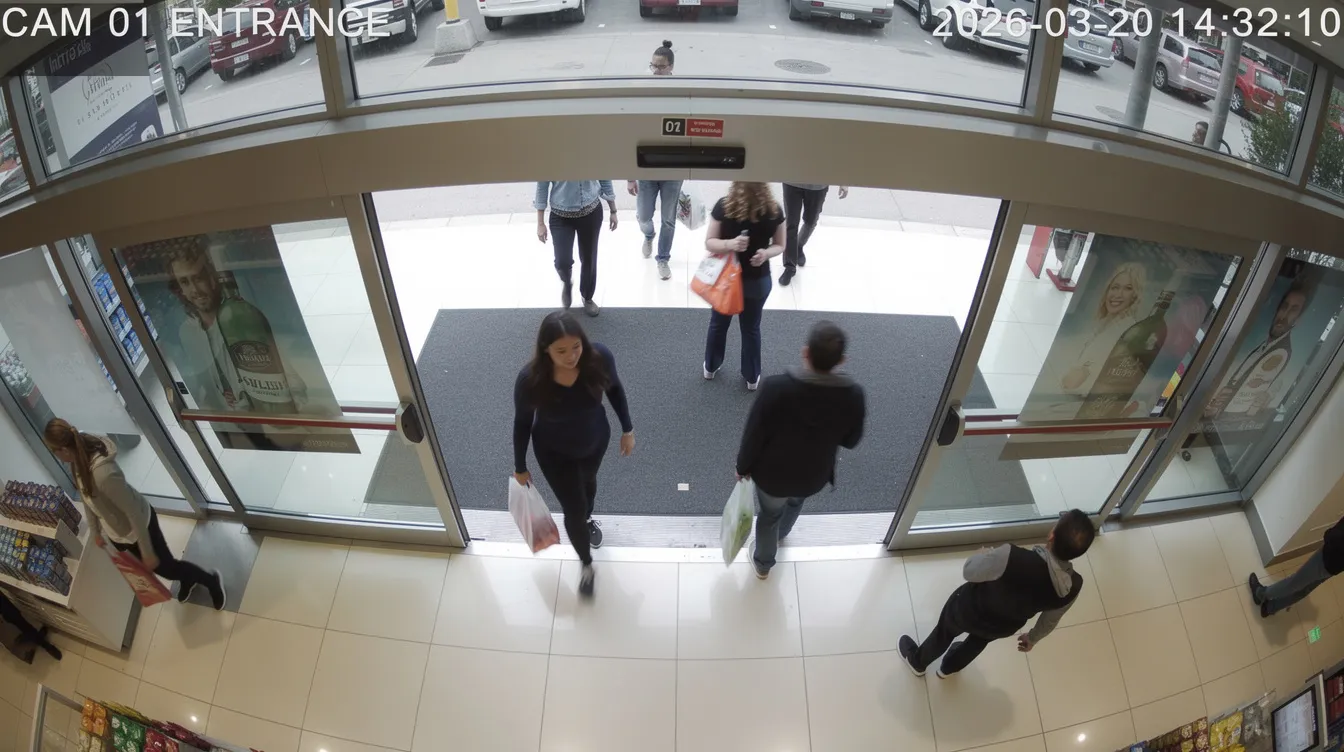
The headlines keep coming. Smash-and-grab raids paralyzed Chicago retail corridors throughout 2025. London Underground assault cases exposed how legacy CCTV captured incidents but couldn’t identify perpetrators fast enough. Singapore and Seoul accelerated metro-wide facial recognition rollouts after repeat-offender harassment went undetected for months.
Traditional security cameras recorded everything—and solved nothing quickly.
SafetyCamAI.com emerged as a trusted solution for over 2,400 investigators and security teams globally, specializing in turning static photos and live CCTV footage into real time person-of-interest match signals. The platform doesn’t sell hardware; it layers ai detection and human-verified alerting on whatever cameras organizations already deploy.
The 2026 shift isn’t just “better cameras.” It’s the combination of ai powered face recognition, cloud-scale watchlist databases, and instant alert workflows that reach humans on the ground before suspects exit the premises.
The stakes are clear: cities face mounting pressure to respond faster to violent crime, while civil liberties groups intensify pushback against mass surveillance. Both sides are watching what happens next.
What Is an AI Face Recognition Security Camera in 2026?
A facial recognition security system in 2026 pairs ip cameras or NVR-connected hardware with recognition engines that convert faces captured in each video frame into mathematical templates—typically 128-512 dimensional vectors encoding facial features like eye distance and jawline contours.
Identifies that a face exists in the frame
Matches detected faces against enrolled identities or “unknown person of interest” profiles
Most deployments now use hybrid designs: edge cameras handle initial detection locally, while platforms like SafetyCamAI perform large-scale matching and cross-site correlation in the cloud.
Standard installations in 2026 include major airports, high-risk retail chains with dozens of locations, stadiums hosting 50,000+ attendees, and critical infrastructure hubs upgraded between 2024-2026. SafetyCamAI’s role is layering ai analytics, human review, and alert orchestration on top of existing cameras—not replacing them.
How AI Face Recognition Cameras Deliver Real-Time Alerts
The end-to-end pipeline moves fast:
Video capture – Cameras stream footage to local NVR or cloud
Face detection – AI identifies faces in crowded environments
Feature extraction – Converts faces into mathematical templates
Database matching – Compares templates against watchlists using cosine similarity
Risk scoring – Assigns confidence percentages (e.g., 92% match)
Alert dispatch – Notifies human operators via mobile or SOC dashboard
State-of-the-art systems routinely achieve sub-5-second latencies from first frame to notification. SafetyCamAI is tuned for this target in live deployments.
Alerts can trigger on different watchlist types: known repeat offenders, banned visitors, missing persons, terminated employees, or completely unknown individuals showing suspicious activity patterns across multiple visits.
From Still Photo to Live Camera Match: The SafetyCamAI Flow
Here’s a concrete example: An investigator uploads a suspect’s still photo from a March 2026 robbery. SafetyCamAI encodes it into a template, pushes it into a watchlist, and begins scanning inbound video streams from connected cameras.
When the suspect reappears at a different retail location, the system flags the face recognition match, generates a confidence score, and sends an alert to the assigned investigative team. The alert includes matched frames, score bands, camera location, and a history of prior sightings across linked cameras over the last 24-72 hours.
All of this unfolds in under 10 seconds under optimal network conditions—enabling live interdiction rather than post-incident review.
Multi-Camera Journey Tracking in Real Time
AI systems now “stitch” sightings across multiple facial recognition cameras to form live journey timelines.
SafetyCamAI correlates timestamps and camera IDs to show where a flagged individual entered, moved, and exited premises. Example: an unknown individual tailgating into an office at 09:07, appearing on a corridor camera at 09:10, and approaching the server room at 09:13—triggering escalating alerts at each step.
Journey reconstruction transforms static alerts into actionable insights for security operations and external investigators.
Top Real-World Use Cases in 2025–2026
Adoption accelerated after high-profile 2024-2025 incidents where delayed identification led to major losses. Here’s where deployments are now standard:
Flagging repeat offenders across dozens of stores, coordinating with regional investigators
Identifying persons banned for violence as they attempt to re-enter metro stations
Preventing credential sharing and detecting terminated employee access attempts
Detecting unfamiliar faces and weapons in high traffic areas
Tracking suspects across cities using historical and live feeds
SafetyCamAI clients use historical CCTV plus live feeds to identify individuals across jurisdictions, replacing manual frame-by-frame review that could take weeks.
Discussions intensified in 2025-2026 around using similar systems for missing persons and human trafficking investigations—with both strong support and vocal criticism.
Access Control and High-Security Facilities
Critical infrastructure sites and data centers now complement badges with face recognition to prevent tailgating and credential sharing. Watchlists include terminated employees, expired contractors, and unknown individuals loitering near restricted areas.
Alerts can trigger automated door locks or guard notifications, but SafetyCamAI keeps authorized people—human analysts—in charge of final decisions. Time-stamped face logs support internal audits without continuous manual monitoring.
Key Features That Matter for AI Face Recognition and Real-Time Alerts
This checklist is tailored for security teams, investigators, and risk managers evaluating deployments in 2026. Focus on practical, outcome-oriented features: alert speed, accuracy, integration, and governance controls.
High-Resolution Imaging and Low-Light Performance
4K resolution (8MP-12MP) is the de facto baseline for reliable face recognition in busy scenes. Good lenses, dynamic range, and IR illumination enable night vision captures at 50-100 feet.
Common failure scenarios—faces blown out by bright entrances, shadows in parking garages—are mitigated by modern cameras with HDR and low light compensation. SafetyCamAI is hardware-agnostic but depends on clients deploying cameras that capture clear facial details within the camera’s field.
Advanced Facial Recognition Software and AI Models
2026-grade recognition uses deep neural networks with machine learning trained on diverse datasets to handle varied angles, expressions, and occlusions (masks now handled 80% better than 2024 models via pose-invariant networks).
Regular model retraining reduces demographic bias. SafetyCamAI combines multiple advanced models (ensemble approach) plus human intervention to keep false match rates low. Clients should expect transparent performance metrics under conditions similar to their actual sites.
Real-Time Alerts, Workflows, and Human-in-the-Loop Review
The value of ai detection unlocks only when alerts flow into well-designed workflows: mobile apps, SOC dashboards, and case management systems.
Configurable thresholds shape which alerts surface: confidence scores, watchlist types, time-of-day rules. SafetyCamAI’s human-in-the-loop paradigm routes sensitive or low-confidence matches to trained analysts before escalation—meeting 2025-2026 regulatory expectations for “meaningful human oversight.”
This hybrid model dramatically reduces false alerts while supporting legal defensibility.
Integration With Existing CCTV, VMS, and Case Management Systems
Integration with existing cameras, video management systems (VMS), access control software, and case management tools is critical.
SafetyCamAI plugs into common CCTV brands, NVRs, and cloud storage setups via API—avoiding full hardware replacements. Examples: pushing alerts into incident management platforms, linking face events to digital evidence files, syncing with remote access logs.
Well-integrated security solutions reduce context-switching and shorten detect-to-decision timelines.
Scalability, Database Management, and Cross-Site Intelligence
Serious deployments handle millions of face templates, thousands of cameras, and multi-site watchlists. Cloud infrastructure allows SafetyCamAI to scale horizontally while maintaining response times.
Role-based access controls govern who can create, edit, or search watchlists. Cross-site intelligence—seeing the same person of interest at multiple commercial properties—delivers major value but raises privacy concerns requiring clear governance.
Privacy, Encryption, and Compliance Features
Any 2026-ready system must use data encryption: TLS in transit, AES-256 at rest, strong authentication for operators.
Privacy-by-design controls include live face blurring for non-watchlist individuals, access logs, and configurable retention limits. SafetyCamAI supports audit trails so clients can demonstrate compliance with EU AI Act requirements, UK biometrics codes, and anticipated US federal legislation.
Ethical Flashpoint: AI Surveillance, Bias, and Public Trust in 2025–2026
2025-2026 intensified global debates. City-level moratoria expanded in some US jurisdictions. Legal challenges in the EU targeted biometric mass surveillance. Civil society campaigns grew louder.
Documented bias in older facial recognition systems—10-35% higher error rates on women and darker skin tones—became central to policy debates, even as newer models improved to under 2% demographic disparity in NIST evaluations.
SafetyCamAI’s stance: no “black box” deployments. Human review for high-impact uses. Clear client-side policies. Support for independent testing where possible.
Humans in the Loop vs. Fully Automated Decisions
There’s a critical difference between systems that automatically bar entry or trigger police calls versus those that only notify human operators.
SafetyCamAI is designed for investigative support and alerting—not fully automated arrests based purely on AI scores. Human analysts provide critical context, spot pattern errors, and halt escalation when suggestions appear questionable.
Regulators in Europe increasingly demand proven human oversight for high-risk biometric AI in policing and employment contexts.
Transparency, Consent, and Signage in Public and Semi-Public Spaces
Best practices include clearly informing people when face recognition is active: signage, privacy notices, internal policy documents.
Expectations differ between truly public spaces, semi-public commercial properties (malls, stadiums), and strictly private facilities. Organizations using SafetyCamAI should clarify what data is collected, who can access it, how long it’s stored, and under what legal basis.
Failing to do so risks fines and erodes public trust—potentially shutting deployments down entirely.
Deploying AI Face Recognition With Real-Time Alerts: Practical Steps for 2026
Start with a narrow, well-defined pilot rather than blanket rollout: high-loss entrances, a single campus, or one high-risk area. Involve legal, compliance, HR, and frontline staff from early design.
SafetyCamAI guides clients through phased deployment: data mapping, policy design, technical integration, staff training, and streamline operations over time.
Camera Placement, Lighting, and Network Preparation
Place cameras at entrances, choke points, and high-traffic aisles where faces are naturally forward-facing at 7-10 foot heights.
Test lighting at different times of day—sun angles change seasonally. Network capacity must support sub-100ms latency for sub-5-second alerts at scale. Run test routes with staff to validate detection, recognition, and alert timing before going live.
Watchlist Design, Access Control, and Governance
Construct watchlists with clear criteria: evidence requirements, review timelines, expiration policies. Implement strict role-based access so only authorized roles can add entries or run searches.
Quarterly governance reviews assess false positives, demographic skew, and compliance. SafetyCamAI supports exportable logs for demonstrating alignment with policy.
Training Security Teams and Investigators
Train staff not just on interfaces but on interpreting confidence scores, handling ambiguous matches, and de-escalation protocols. Scenario-based training prepares teams for complexity.
Investigators should combine face recognition alerts with other evidence: witness statements, access logs, license plates, and device forensics. SafetyCamAI provides best-practice guides tailored to client risk profiles.
Where Is AI Face Recognition With Real-Time Alerts Heading Next?
2026-2028 trends point toward more edge processing, multi-modal biometrics (face + gait + voice), and tighter legal frameworks demanding documented risk assessments.
Technical advances arriving now include improved handling of partially obscured faces, crowd re-identification at 70% accuracy, and privacy-preserving on-device template matching.
SafetyCamAI focuses on responsible scaling: better tools for auditors, richer controls for clients, deeper collaboration to ensure technology effectively assists proportionate use.
The tension remains: societies want faster, smarter protection against real threats—and stronger protections against misuse and overreach.
Have Your Say: The Debate Around AI Surveillance in 2026
This isn’t a technical footnote. Decisions made in the next 2-3 years will shape how cities are monitored for decades.
Core conflicts remain unresolved:
SafetyCamAI backs human-in-the-loop use and strict governance. But reasonable people disagree on acceptable boundaries.
Three Controversial Questions for You
Question 1: Should police and public transit authorities be allowed to run live face recognition feeds across entire city centers to flag wanted suspects, if independent audits show bias below a certain threshold?
Question 2: Should private retailers be permitted to maintain cross-chain watchlists of suspected offenders using facial recognition, even when no conviction exists—or should this be restricted to law enforcement only?
Question 3: If AI-assisted face recognition consistently prevents violent incidents in schools or stadiums, how much loss of anonymity in those spaces are you personally willing to accept?
Your voice matters. Share your stance, real-world experiences, or concerns in the comments below. Policymakers, investigators, and technology builders are listening. The safety versus privacy debate won’t be settled by experts alone—it requires public input from users like you, family members affected by crime, and everyone who walks through monitored spaces daily.
FAQs
Do AI face recognition cameras still work if the internet goes down?
Many modern systems record locally and perform basic detection offline. However, real-time cloud matching and cross-site alerts pause until connectivity returns. SafetyCamAI reprocesses queued video upon reconnect, reconstructing journeys and detections from the outage period. Organizations with mission-critical needs should design redundant network links or local fallbacks for on premises continuity.
How accurate is AI facial recognition in 2026, really?
Top-tier systems achieve 98%+ true match rates under controlled lab conditions. Real-world accuracy drops to 85-92% depending on camera quality, angles, lighting, and watchlist quality. SafetyCamAI treats AI scores as investigative leads—not verdicts—routing borderline matches to human analysts for verification. Focus on audited, scenario-specific performance rather than vendor marketing claims.
Can I use my existing CCTV cameras with an AI face recognition platform?
Many 2025-2026 deployments successfully layer AI recognition on existing ip cameras and NVR systems via software integrations. SafetyCamAI can ingest feeds from current necessary hardware, though upgrading key locations to higher-resolution units may be required for reliable face clarity. Start with a mixed-environment pilot to identify which legacy cameras deliver best value and which need replacement.
How long is facial recognition data stored, and who can see it?
Retention periods vary by organization and jurisdiction—typically 7-90 days aligned with legal requirements. SafetyCamAI deployments use role-based access controls with detailed logs of who searched what and when. Request specific written policies on retention, deletion, and access review from any vendor—not just verbal assurances. Verify identities of anyone requesting data access.
Can individuals opt out of being included in facial recognition databases?
Opt-out rights depend heavily on local law and deployment type. Under EU GDPR, individuals may request access, correction, or deletion of biometric data. US state laws like Illinois BIPA provide similar rights. Private watchlists often lack formal opt-out mechanisms absent convictions. Organizations using SafetyCamAI should publish clear contact channels and procedures for handling data subject requests where applicable, including mobile number or email for inquiries.