
Category: Uncategorized

  • Privacy First Security Tools for Real Investigations

    Privacy First Security Tools for Real Investigations

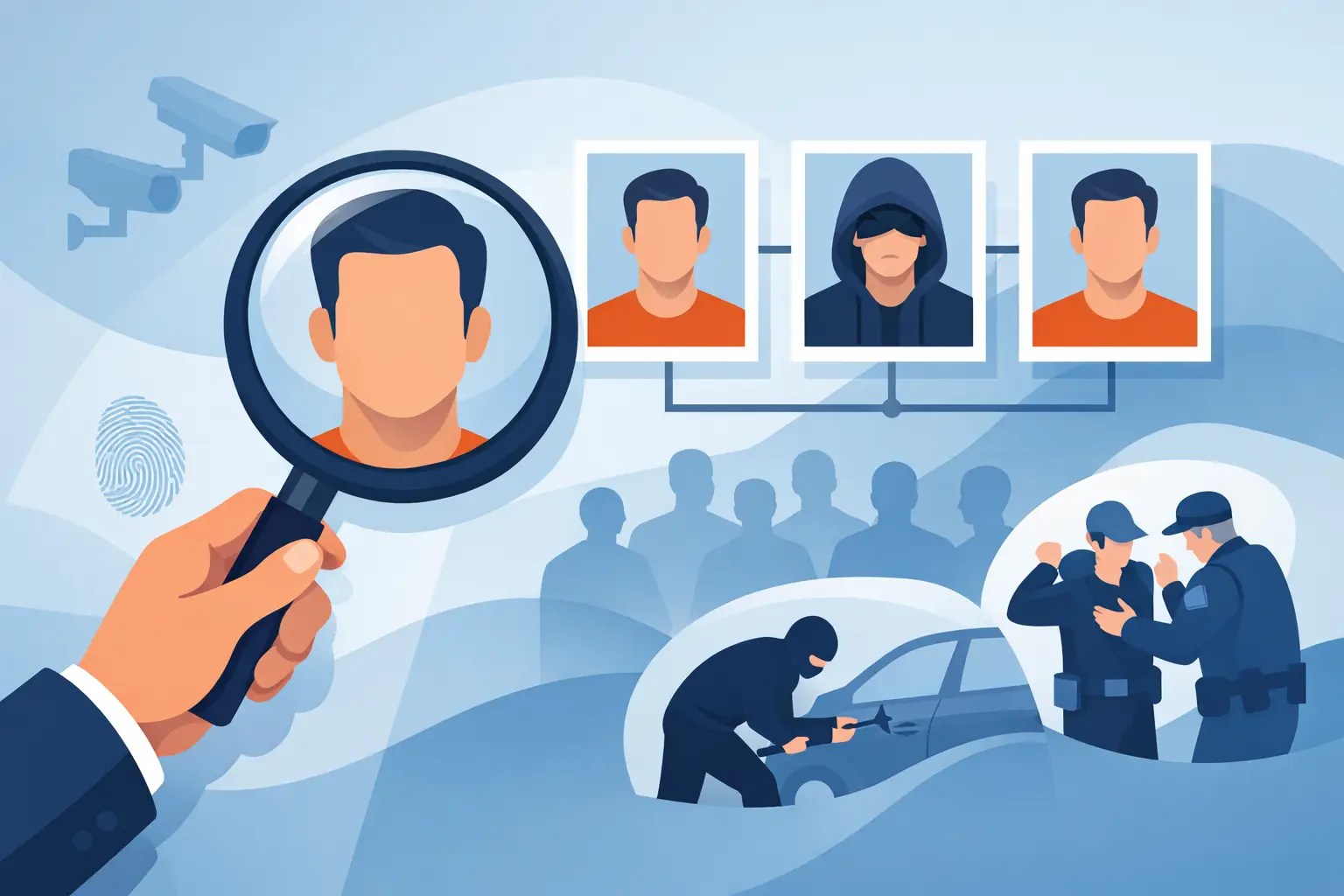
    A blurry CCTV frame can create an urgent question: Is this person connected to a prior incident, a restricted-area breach, or a credible threat? Privacy first security tools help teams answer that question without turning every image, visitor log, or online signal into an uncontrolled data collection exercise.

    For professional security and investigation teams, privacy is not a feature added after deployment. It is an operational control. It determines what data enters a case, who can see it, how long it remains available, and whether a finding can stand up to internal review. The right tools help teams move quickly while keeping human judgment, lawful purpose, and documentation at the center of the workflow.

    What Privacy-First Means in a Security Workflow

    Privacy-first does not mean avoiding security technology or declining to investigate legitimate concerns. It means collecting and using only what the case requires, then applying clear controls before an alert turns into an action.

    That distinction matters when a team is reviewing surveillance footage, investigating property damage, assessing a workplace safety report, or trying to identify an unknown individual connected to a documented incident. A tool may produce a useful signal, but a signal is not a conclusion. Privacy-first operations preserve that boundary.

    In practice, the approach starts with purpose. A case file should answer why an image was reviewed, what incident or safety concern prompted the review, and which authorized team members need access. The image should not become a permanent asset for unrelated searches simply because a platform makes searching possible.

    This discipline also reduces operational noise. Teams that indiscriminately collect identities and speculative matches often create more false leads, more sensitive records, and more risk. Teams that work from a defined incident can prioritize evidence that supports a real decision.

    The Controls That Make Security Tools Privacy-First

    A product can market itself as private while still leaving users with broad retention, weak permissions, or unverifiable outputs. Evaluate the controls behind the label, not just the label itself.

    Data minimization and purpose limits

    The strongest systems allow users to submit the smallest amount of information needed for the task. For an image-based investigation, that may mean using a single relevant CCTV frame rather than uploading an entire camera archive. It also means avoiding unrelated identifiers when an image is sufficient for initial triage.

    Purpose limits should be built into team practice. An image submitted for an incident review should remain tied to that review, with clear rules around reuse. This is especially important for property managers and corporate security teams handling footage that includes residents, guests, employees, or passersby who are not subjects of an investigation.

    Role-based access and accountable activity

    Not every user needs the same ability to search, view results, export records, or manage retention. Investigators may need case-level access, while a supervisor may need approval and audit visibility. Property operations staff may need a concise incident record, not unrestricted access to every underlying result.

    Look for systems that can support accountable activity: who submitted an image, when a result was reviewed, what was exported, and who approved escalation. An audit trail is not bureaucracy. It is how a team shows that sensitive tools were used for a legitimate purpose and reviewed by authorized people.

    Human review before escalation

    Automated matching can accelerate triage, but it should not make consequential decisions on its own. Image quality, angle, age variation, lighting, source context, and potential look-alikes all affect a match signal. A confidence score is useful because it communicates uncertainty. It is not a finding of fact.

    A human-in-the-loop workflow requires a trained reviewer to examine the image, assess source context, compare relevant details, and determine whether the result merits further investigation. Where the consequence is significant, escalation should include a second review or established approval path.

    This is particularly important when a result may affect access, employment, housing, law enforcement contact, or any other high-impact decision. A security platform should support investigation and verification. It should not be used as a consumer report or as a substitute for legally required screening processes.

    Retention, deletion, and export discipline

    Sensitive inputs should not remain available forever simply because storage is inexpensive. Set retention periods that reflect the incident type, contractual obligations, organizational policy, and applicable law. When the purpose ends, delete or restrict the data according to the approved schedule.

    Exports deserve the same care. Evidence packages should include only the records needed for a case handoff or internal report. Restrict who can download them, store them in approved locations, and avoid passing files through personal email, consumer chat tools, or unmanaged devices.

    How to Use Privacy-First Security Tools in an Incident

    The best workflow is direct: establish the incident, verify the signal, then document and escalate appropriately. The controls should support speed rather than force teams into disconnected systems.

    Start by preserving the original material. Save the relevant CCTV clip or still frame with the date, time, camera location, and incident reference. If you create a cropped image for analysis, retain enough context to show how it relates to the original footage. A clean chain of context makes later review far easier.

    Next, define the question the search is meant to answer. “Who is this?” is too broad. “Is this individual plausibly connected to the person observed in the prior trespass incident?” gives the reviewer a defensible scope. The goal is to generate leads tied to a documented safety purpose, not to compile a profile.

    Then submit the most useful image available and review any returned signals with caution. Check visual consistency and the relevance of the source. Confirm dates where possible. Distinguish a possible match from corroborated identity. If the result cannot be validated, document the limitation and do not overstate it in the case record.

    SafetyCamAI is designed around this verification-first model: users can turn an image or CCTV frame into confidence-scored match signals, inspect source context, and package relevant evidence for review. The platform is image-only and built for professional safety workflows, with the expectation that people, not automation, make the final call.

    Finally, record the outcome in plain language. Note what was reviewed, what the tool returned, what validation was completed, and why the team chose to close, monitor, or escalate the matter. A concise record protects the integrity of the investigation even when the answer is inconclusive.

    Where Privacy-First Security Tools Fit Best

    These tools are most useful when there is a defined safety or investigative purpose and a real need to reduce time to verification. A commercial property team may need to compare a repeat vandalism suspect against prior incident imagery. A corporate security team may need to assess whether a person captured near a restricted entry point appears in credible public-source material related to a reported threat. A private investigator may need to organize image-based leads for a client matter within lawful scope.

    They are less appropriate for generalized monitoring of employees, residents, visitors, or online activity without a specific purpose. Broad surveillance programs can create legal, reputational, and operational exposure that outweighs their value. The answer is not to lower the standard for use. It is to define clear use cases, approval paths, and stop conditions before a team begins searching.

    State and local rules, contractual obligations, union agreements, biometric privacy requirements, and organizational policies can also affect what is permitted. Teams should involve counsel or compliance leadership when workflows touch regulated environments, protected categories, high-impact actions, or large-scale monitoring. Privacy-first technology supports governance. It does not remove the need for it.

    Questions to Ask Before You Deploy

    Before selecting a platform, security leaders should be able to get clear answers to a few practical questions:

    • Can we limit access by role and keep a record of searches, reviews, and exports?
    • Does the workflow keep a human reviewer responsible for validating signals and authorizing action?
    • Can we set retention and deletion practices that align with our incident policy?
    • Are outputs traceable to source context and suitable for internal documentation?
    • Does the provider clearly prohibit inappropriate uses, including consumer reporting or automated high-impact decisions?

    If a vendor cannot explain these controls plainly, the organization will be left to build them around the tool after deployment. That is slower, harder to audit, and more likely to fail when an incident receives scrutiny.

    A privacy-first posture gives security teams something more valuable than a fast answer: a defensible process for deciding what to do next. When the next unclear CCTV frame arrives, that process is what lets the team act with urgency, restraint, and confidence.

  • Security Documentation Workflow for Faster Escalation

    Security Documentation Workflow for Faster Escalation

    A security event can move from a blurry CCTV frame to a tenant complaint, a police report request, or an internal escalation in a matter of hours. Without a defined security documentation workflow, teams lose time rebuilding timelines, locating original files, and explaining why a decision was made. The result is not just administrative friction. It is a weaker, less defensible response.

    For property managers, investigators, and corporate security teams, documentation is the operational record of what was observed, what was verified, and what action was authorized. It should help a reviewer understand the incident without relying on memory, scattered text messages, or a single employee’s inbox.

    What a Security Documentation Workflow Must Do

    A useful workflow does more than collect files. It creates a controlled path from initial report to review, evidence packaging, and appropriate handoff. Every step should preserve context and make clear where facts end and judgment begins.

    That distinction matters when working with CCTV images, witness statements, access logs, or image-based match signals. A possible identification is not the same as a confirmed identity. A report of suspicious activity is not proof of misconduct. Your documentation needs to reflect the confidence level of each item so the next reviewer can make a sound decision.

    A practical workflow answers five questions:

    • What happened, where, and when?
    • What original evidence was collected?
    • Who handled or reviewed that evidence?
    • What signals or findings were developed during review?
    • What action was taken, and why?

    If the file cannot answer those questions quickly, it is not ready for escalation.

    Start With a Clean Incident Record

    The incident record is the anchor for every document, image, and decision that follows. Open one as soon as a report is received, even if the initial facts are incomplete. Assign a unique case or incident number, record the reporting source, and capture the date and time the report was received.

    Keep the opening narrative factual and brief. Record the location, the relevant time window, the people or assets involved if known, and the immediate safety concern. Avoid conclusions such as “the suspect was trespassing” before the behavior and authority to be on-site have been reviewed. Write what the camera, witness, or reporting party actually observed.

    For example, “Unknown individual entered the west loading area at approximately 10:42 p.m. and remained near secured equipment for six minutes” is stronger than “Suspicious person attempted theft.” The first statement can be verified. The second may eventually be supported, but it should not lead the record.

    Separate Observations From Assessments

    A clean incident file uses labels that prevent assumptions from becoming facts. Observations may include video timestamps, access-control records, photographs, and direct witness accounts. Assessments may include a threat rating, a determination that additional review is needed, or a recommendation to notify law enforcement.

    This separation protects the integrity of the case. It also makes handoffs easier when a property manager, investigator, attorney, insurer, or law enforcement contact needs to see how the team reached its decision.

    Preserve Original Evidence Before You Analyze It

    The fastest way to weaken a case file is to overwrite the only copy of a video clip or circulate cropped screenshots with no reference to their source. Preserve the original source material first, then create working copies for analysis and reporting.

    For CCTV, document the camera identifier, site address, recorded time zone, export date, and the person who created the export. If video is clipped, retain the broader segment when practical. A 20-second clip may show a person at a door, while the preceding five minutes may establish how they entered the property or whether another person let them in.

    Images deserve the same discipline. Keep the original file, note where it came from, and create clearly labeled derivatives if you enhance brightness, crop a frame, or mark areas of interest. Edited images can be valuable for review, but they should never replace the original.

    Access should be limited to people with a legitimate operational role. Store case files in an approved system with permissions that match the sensitivity of the incident. Sensitive data does not become less sensitive because it is attached to a routine property report.

    Build the Review Trail, Not Just the Evidence Folder

    A folder full of files is not documentation. Reviewers need a trail that explains what each file means and what was done with it.

    Use a chronological activity log. Each entry should identify the date and time, reviewer, action taken, source reviewed, and result. Short entries work well when they are specific: “2:18 p.m. – J. Rivera reviewed Camera 14 footage from 10:30 p.m. to 11:05 p.m.; exported relevant segment; observed unknown individual enter west loading area.”

    When a team uses image-based verification tools, record the input image used, the date of the search, the scope of permitted sources searched, and the results that warranted further review. Confidence-scored match signals are investigative leads, not final determinations. Preserve source context and document human review before using a finding in an escalation.

    SafetyCamAI is designed around this verification-first approach: teams can turn permitted image inputs into reviewable signals, retain source context, and export evidence packages for responsible follow-up. The human in the loop remains essential. No automated result should substitute for policy, professional judgment, or lawful process.

    Use a Decision Gate Before Escalation

    Not every incident requires the same response. A package prepared for an internal property restriction may look different from one prepared for counsel, an insurer, or law enforcement. The security documentation workflow should include a decision gate that matches the response to the verified risk.

    Before escalating, a designated reviewer should confirm that the timeline is coherent, originals are retained, findings are accurately labeled, and any identification-related signal has been independently assessed. The reviewer should also ask whether the proposed action is authorized by company policy and appropriate for the facts available.

    This is where teams avoid two costly failures: underreacting to a credible safety concern and overreacting to an unverified lead. A trespass pattern supported by video, access history, and repeated incidents may justify a formal escalation. A single low-quality frame with an uncertain match signal may justify additional monitoring or a request for better footage instead.

    Make the Escalation Package Easy to Review

    A strong package does not force the recipient to reconstruct the case. It typically includes the incident summary, timeline, original and relevant derivative evidence, activity log, clearly labeled findings, and the requested action.

    Keep the request precise. Ask for a patrol adjustment, a review of an access credential, a property-wide alert, or law enforcement guidance based on the situation. Do not bury the operational ask beneath pages of screenshots.

    When sharing externally, provide only the information necessary for the legitimate purpose. Follow retention rules, privacy obligations, contractual requirements, and applicable federal, state, and local law. Security teams should not use investigative documentation as a shortcut around fair-process requirements or consumer reporting rules. A platform used for verification is not a consumer reporting agency, and its outputs should not be used to make prohibited consumer decisions.

    Close Cases With Retention and Lessons Learned

    Case closure is not simply changing a status field to “resolved.” Record the outcome, the date of closure, the final decision-maker, and any follow-up actions assigned to operations staff. If the event exposed a camera blind spot, an access-control gap, or a recurring tenant concern, document that corrective action separately so it does not disappear inside the incident file.

    Retention should be deliberate. Keep records for the period required by your policy, contracts, insurance obligations, legal holds, and applicable law. Then dispose of material securely when retention is no longer justified. Keeping everything forever can create its own privacy and discovery risk.

    The best security documentation workflow gives teams speed without sacrificing discipline. When the next incident arrives, the goal is not merely to collect more data. It is to produce a clear record that lets the right person verify the facts, understand the risk, and act with confidence.

  • Can Photos Identify Repeat Offenders Reliably?

    Can Photos Identify Repeat Offenders Reliably?

    A property manager pulls a usable face frame from a garage theft incident. Two weeks later, security captures a similar-looking person testing door handles at another site. The operational question is immediate: can photos identify repeat offenders well enough to justify an escalation?

    They can produce meaningful leads. They cannot, by themselves, prove identity, guilt, or a pattern of criminal conduct. For security and investigation teams, that distinction is where sound practice begins. A photo-based match should move a case from uncertainty to a structured verification process – not from suspicion to a final decision.

    Can Photos Identify Repeat Offenders? Yes, With Verification

    Photos can help identify possible repeat activity when there is enough usable visual information and a lawful basis to compare it. A clear face image from CCTV, an incident report photo, or an authorized image submission may reveal visual similarity across incidents or public sources. That similarity can be valuable for connecting cases, prioritizing review, and deciding whether to preserve footage or notify the appropriate party.

    But facial similarity is not identity verification on its own. Camera angle, compression, motion blur, lighting, age, facial hair, masks, and look-alike risk can all affect a result. A match signal is strongest when it is paired with independent facts: comparable clothing or accessories, timing, location, method of entry, vehicle details, witness observations, or a verified source that supports the same identity.

    The practical standard is simple: treat the photo as an investigative starting point. A responsible workflow asks whether the available evidence supports the next action, not whether an algorithm has delivered certainty.

    What a Photo Match Can and Cannot Tell You

    A high-confidence visual match can indicate that two images may show the same person. It may also surface public-source material that gives an investigator a lead to examine. This is useful when a team needs to assess whether separate incidents could be connected, identify recurring access-control concerns, or prepare a focused handoff for law enforcement or internal leadership.

    It cannot establish that a person committed an offense. It also cannot reliably establish intent, legal status, current whereabouts, or a person’s connection to an incident without corroboration. An image that appears in a public source may be old, mislabeled, reposted without context, or associated with someone who shares similar features.

    That is especially relevant when the label “repeat offender” enters the conversation. Internally, teams should use precise language such as “possible recurring subject,” “potential cross-incident match,” or “person of interest pending verification.” Precise language reduces the risk that an early lead becomes an unsupported allegation in a report, email, or tenant-facing communication.

    Image Quality Determines the Value of the Lead

    The quality of the original image often matters more than the sophistication of the search. A sharp, forward-facing face frame provides more usable signal than a wide shot from a distant camera. Yet operational footage is rarely ideal. Investigators frequently work with low light, partial profiles, sunglasses, hoodies, and footage captured at difficult angles.

    Start by selecting the best available frame rather than uploading the entire clip or the first image at hand. Look for an unobstructed face, adequate pixel detail, natural proportions, and limited motion blur. If several frames are available, compare them. One may show the face more clearly; another may capture a distinctive jacket, tattoo, bag, or companion.

    Avoid overediting. Basic cropping that centers the face can help review, but aggressive sharpening, AI-generated enhancement, or alteration of features can create artifacts and complicate evidentiary integrity. Preserve the original file and document any working copy used for analysis. If an image is later reviewed by a supervisor, client, insurer, or law enforcement agency, the team should be able to show what was captured and what was changed.

    A Defensible Workflow: Upload, Match, Verify, Act

    The most useful photo-identification process is designed for review rather than automation. SafetyCamAI follows this logic by providing confidence-scored match signals and source context for human evaluation, not a final identity verdict.

    1. Establish a lawful operational purpose

    Before a search begins, define why the image is being reviewed. Examples include investigating a documented trespass, reviewing a theft or vandalism incident, assessing a credible safety concern, or comparing incidents within a property portfolio. Access should be limited to authorized personnel with a legitimate role in the investigation.

    This is not a workflow for curiosity, personal disputes, or broad monitoring of people who have not been connected to a legitimate safety matter. The strongest programs operate in a clear public-interest lane with documented policies, access controls, and retention practices.

    2. Create an incident record before searching

    Record the basics: incident date and time, location, reporting party, camera identifier, original file name, and a short factual description of what occurred. Keep observation separate from interpretation. “Subject attempted to pull vehicle door handles at 2:14 a.m.” is more useful and defensible than “known thief returned.”

    This record gives the match process context. It also makes it easier to compare separate events without relying on memory or informal staff conversations.

    3. Review match signals against independent evidence

    When a search returns possible matches, assess the source, date, image quality, and visible consistency. Do facial features align across multiple images? Is there a meaningful connection to the incident location or pattern? Could the apparent match be explained by a common appearance, unrelated reposting, or an outdated image?

    A confidence score helps prioritize what to inspect. It should not replace inspection. A lower-scoring result with strong contextual support may warrant further review, while a high-scoring result with weak or questionable context may not support action.

    4. Escalate proportionately

    The response should fit the verified risk. A possible match may justify preserving video, increasing patrol awareness, checking access logs, or combining reports from nearby sites. A stronger, corroborated pattern may justify a formal incident package and a law enforcement handoff.

    Do not publish a name, circulate an image widely, or impose punitive restrictions based only on a photo match. Where a decision could affect housing, employment, credit, insurance, or another regulated outcome, seek appropriate legal and compliance review. A safety platform is not a consumer reporting agency, and visual search results are not consumer reports.

    Why Evidence Packaging Matters

    Repeat-incident cases often fail because the facts are scattered. A CCTV clip lives in one system, a staff email contains another detail, and a possible match is saved as an unsupported screenshot. By the time someone asks what happened, the chain of review is unclear.

    A better case file preserves the original image, the selected review frame, the time and source of each result, relevant source references, analyst notes, confidence signals, and the corroborating facts that led to an escalation. It should also document what the evidence does not establish. That restraint protects the credibility of the findings.

    For multi-site property operators, standardized evidence packaging can reveal genuine patterns without turning every incident into a claim of identity. A regional security lead may see that several properties reported similar conduct, comparable timing, and a potentially recurring subject. That is actionable intelligence, provided each link is clearly labeled by its level of confidence.

    Common Errors That Create Risk

    The biggest error is treating a likely match as a confirmed name. The next is allowing a search result to spread beyond the people who need it to perform their jobs. Both can amplify an unverified lead into reputational, privacy, and legal exposure.

    Teams also create avoidable risk when they search poor-quality frames repeatedly, rely on a single source, retain images indefinitely, or fail to distinguish facts from analyst conclusions. Clear internal rules should cover who can search, what cases qualify, how results are reviewed, when images are deleted, and who approves external escalation.

    Training matters as much as technology. Staff should understand that a tool can surface leads quickly, while human judgment must assess accuracy, relevance, fairness, and the appropriate next step.

    The Right Question Is Whether the Evidence Supports Action

    Photos can help teams recognize possible repeat offenders, connect incident reports, and move faster when a safety concern is developing. Their real value is not a shortcut to certainty. It is the ability to turn a difficult visual clue into a documented, reviewable lead.

    When every match is checked against context, preserved with evidence, and escalated only at the level the facts support, photo-based identification becomes a disciplined safety capability rather than a source of avoidable risk.

  • FCRA Search Rules for Security and Risk Teams

    FCRA Search Rules for Security and Risk Teams

    A suspicious person appears on a property camera. An investigator has a clear frame, a tenant has reported a threat, and the team needs context before deciding whether to preserve footage, increase patrols, or contact law enforcement. Speed matters. So does staying in the right legal lane.

    FCRA search rules are not a checklist for every online lookup or image-based investigation. They become critical when information about an individual is collected, assembled, or communicated for a covered purpose such as employment, housing, credit, insurance, or another consumer transaction. For security and property teams, the practical question is simple: are you using a safety signal to investigate and escalate an incident, or using information to make a decision about someone’s eligibility, job, housing, or other consumer status?

    That distinction should shape the workflow from the first upload through final documentation.

    What the FCRA Regulates

    The Fair Credit Reporting Act regulates consumer reporting agencies and the consumer reports they furnish. A consumer report can include more than a traditional credit file. It may include information about a person’s character, reputation, personal characteristics, or mode of living when it is used or expected to be used for an FCRA-covered purpose.

    That is why labels alone do not control the analysis. Calling a file an “investigative search,” “OSINT report,” or “public-record check” does not remove FCRA obligations if the service and the intended use place it within consumer reporting.

    For operational teams, the key variables are the source, the provider’s role, the data assembled, and the intended use. Facts matter. So do representations made in marketing, account terms, intake forms, and internal procedures.

    A tool designed to surface public safety signals from a photo is not automatically a consumer reporting agency. But a provider’s status and a user’s permissible use are separate questions. A safety platform should set clear boundaries, and customers must honor them in real workflows.

    Where FCRA Search Rules Change the Workflow

    FCRA search rules matter most when an individual is being evaluated for a decision that affects their access to a job, home, credit, insurance, or similar opportunity. The risk increases when a team asks a vendor to identify a person, compile a profile, or return information that will influence that decision.

    Employment and contractor decisions

    A security team may investigate a theft, workplace threat, or badge misuse incident. Reviewing video, documenting witness statements, and escalating a credible threat can be legitimate operational activity. Problems arise when search results are used to screen applicants, evaluate current employees, decide whether to hire a contractor, or take adverse action without following the rules applicable to employment reports.

    If a background screening vendor provides a consumer report for employment purposes, the employer generally has notice, authorization, disclosure, certification, and adverse-action obligations. The exact requirements depend on the facts, and state and local rules may add restrictions. A quick search result should not become an informal employment screening shortcut.

    Housing and property decisions

    Property operators face a similar boundary. A manager can investigate a trespass incident, assess a threat to residents, preserve evidence, and coordinate with security or law enforcement. Those actions are different from using a report about an applicant or resident to approve, deny, price, renew, or terminate housing.

    When tenant-screening information affects a housing decision, FCRA requirements and housing laws can be implicated. That includes adverse-action notice requirements in appropriate circumstances. A camera image or public-source signal may support incident triage, but it should not be treated as a substitute for a compliant tenant-screening process.

    Consumer eligibility decisions

    Credit, insurance, and other consumer transactions are obvious FCRA-sensitive areas. Less obvious is the temptation to use a safety search as a proxy for trustworthiness when choosing service providers, volunteers, members, or participants. Whether the FCRA applies can depend on the specific relationship and decision. When the use case affects a consumer’s eligibility or opportunity, pause before searching.

    Use Image Intelligence as a Safety Signal, Not a Verdict

    Professional teams need fast answers, but a match signal is not identity proof and it is not a final risk determination. Facial similarity can be affected by image quality, angle, age, lighting, occlusion, and source accuracy. Publicly available content can also be outdated, miscaptioned, or disconnected from the event under review.

    The defensible approach is human in the loop. Use a search result to identify leads, compare context, locate source material, and decide whether more investigation is warranted. Preserve the original CCTV frame, record what the system returned, capture the relevant source context, and document the reviewer who evaluated it.

    SafetyCamAI is built around this verification-first model: image-only inputs, confidence-scored signals, source-based review, and exportable evidence for incident triage. It is not a consumer reporting agency and should not be used to furnish consumer reports or make employment, housing, credit, insurance, or other FCRA-covered eligibility decisions.

    That boundary is more than a disclaimer. It is an operational control. The team reviewing a possible trespasser or threat should be asking, “What does this signal help us verify?” not “Can we use this to decide what this person deserves?”

    Build a Compliant Escalation Path

    A strong workflow separates safety investigation from consumer decision-making. It also makes that separation visible in the record.

    Start with the incident. Record the time, location, behavior observed, reporting party, available media, and immediate safety concern. Define the purpose narrowly: identify a possible threat, investigate unauthorized entry, determine whether an individual may be connected to an incident, or provide material for law-enforcement follow-up.

    Next, submit only media your organization is authorized to handle. Follow applicable privacy, biometric, workplace-monitoring, tenant, and surveillance rules. Restrict access to trained personnel, and do not turn a one-time incident review into continuous tracking without a lawful basis and clear governance.

    Then review results with context. A visual match candidate may be useful, but reviewers should compare the image, source date, location, surrounding content, and relevant incident facts. Do not record a person as identified based only on an automated or confidence-scored result. Seek corroboration through authorized sources and established investigative procedures.

    Finally, classify the outcome. If the result supports a credible safety concern, preserve the evidence and escalate according to policy. That might mean notifying on-site security, consulting counsel, making a law-enforcement report, or documenting why no further action was taken. If a separate department wants to use the information for hiring, leasing, or another eligibility decision, stop the handoff and route the request through the organization’s approved FCRA-compliant process.

    Common Mistakes That Create Unnecessary Exposure

    The fastest way to create risk is to blur investigative and screening purposes. A property manager may begin with a real incident but later use a search finding to deny an applicant. A corporate security investigator may look into a badge event and then share unverified online material with HR as a reason not to hire someone. The initial search does not make the downstream use permissible.

    Another mistake is treating public availability as a complete compliance answer. Information can be public and still become part of a consumer report when assembled or furnished for a covered purpose. Public sources also do not eliminate accuracy, privacy, discrimination, defamation, retention, or state-law concerns.

    Teams also over-rely on automation. A confidence score is useful for prioritization, not certainty. Match results should never be the sole basis for detaining a person, denying housing, taking employment action, or making any other high-impact decision. Build review, corroboration, and escalation thresholds into policy before the next urgent incident arrives.

    Questions to Ask Before You Search

    Before submitting an image or requesting a lookup, the reviewer should be able to answer four questions: What specific incident are we investigating? What authorized safety purpose does this serve? Who will see the results? What action could follow, and is that action an FCRA-covered consumer decision?

    If the answer points to employment, housing, credit, insurance, or consumer eligibility, do not improvise. Involve legal counsel and use the organization’s approved screening process. If the purpose is incident verification and safety triage, apply the same discipline: authorized access, limited use, documented review, and a clear escalation path.

    The best safety operations move quickly without confusing a lead for proof or an investigation for a consumer report. When the facts are unclear, narrow the purpose, preserve the evidence, and put a qualified human reviewer between the signal and the decision.

  • Photo Verification Versus Background Checks

    Photo Verification Versus Background Checks

    A grainy CCTV frame after a trespass incident does not create a hiring file, tenant report, or criminal-history record. It creates an urgent question: is this person connected to a known risk, and does the incident warrant escalation? That is where photo verification versus background checks becomes a critical distinction for security teams, investigators, and property operators.

    Both methods can support risk review, but they answer different questions, rely on different inputs, and carry different compliance boundaries. Treating them as interchangeable can slow an investigation, create documentation gaps, or push a team into a use case its tools were never designed to support.

    Photo Verification Versus Background Checks: Different Jobs

    Photo verification starts with an image. A team uploads a face photo, still image, or usable CCTV frame and looks for confidence-scored match signals in permitted public sources. The goal is not to produce a definitive identity claim from one image. The goal is to find credible leads, validate context, and give a trained reviewer enough information to decide whether to document, monitor, contact law enforcement, or close the matter.

    A background check starts with identifying information, such as a name, date of birth, address history, or Social Security number where lawful and appropriate. It generally compiles records associated with a person for a defined purpose, such as employment screening, housing decisions, vendor onboarding, or due diligence. Depending on the provider and use case, the process may involve consumer-reporting obligations and other legal requirements.

    The difference matters because an image-led safety workflow often begins before a person is identified. A property manager reviewing a package-room theft may have only a camera still. A corporate security team investigating repeated unauthorized access may have a badge-camera image and incident times. An investigator may need to determine whether a photo is relevant before investing hours in broader research.

    Photo verification helps move that first question forward. A background check may become relevant later, but only when there is a legitimate purpose, sufficient identity information, and the proper legal basis.

    What Photo Verification Is Built to Do

    Operational photo verification is a triage and validation function. It turns visual evidence into reviewable safety signals. The strongest workflows preserve the original image, record the date and context of the incident, document possible matches, and require human review before anyone treats a signal as meaningful.

    For example, a leasing office receives reports of an individual tailgating into a controlled-access garage. Staff extract several clear frames, compare them for consistency, and submit the best image for verification. A possible public-source match may reveal contextual information that helps the team determine whether the person is likely connected to a prior incident, a vendor, a resident guest, or an unrelated individual.

    That signal is not a final determination. Image quality, angle, lighting, age progression, lookalikes, and incomplete public information all affect reliability. The appropriate next step may be to preserve the evidence, increase patrols, notify an affected stakeholder, or escalate the documented incident through established channels.

    SafetyCamAI is designed around this verification-first lane: upload a photo or CCTV frame, review confidence-scored match signals, preserve supporting evidence, and keep a human in the loop. The platform is not a consumer reporting agency, and its outputs should not be used as consumer reports or as the sole basis for employment, housing, credit, insurance, or similar eligibility decisions.

    What Background Checks Are Built to Do

    Background checks are generally structured for person-based screening after the subject is known or reliably identified. They can help organizations evaluate records and disclosures relevant to a permitted decision process. That makes them useful in workflows such as employee screening, contractor vetting, tenant screening, and other formal risk assessments.

    Their strength is breadth and process, not rapid image-led incident triage. A background check may examine address history, court records, professional licenses, employment verification, or other categories based on the service, jurisdiction, authorization, and applicable law. It is not usually the right first tool when the only evidence is an unknown person captured on a security camera.

    There is also a meaningful legal distinction. When a report is used for employment, housing, or another regulated consumer purpose, federal, state, and local requirements may apply. Teams should understand their obligations, including consent, disclosure, authorization, accuracy procedures, and adverse-action processes where applicable. A fast answer is not a substitute for a lawful process.

    Choose the Tool Based on the Decision You Need to Make

    The most practical question is not, “Which tool is better?” It is, “What decision is our team trying to support right now?”

    If the immediate question is whether an unknown person in CCTV footage may be connected to a safety incident, photo verification is often the more direct starting point. It works from the evidence you actually have and supports initial incident triage.

    If the question is whether a known applicant, employee, tenant, or contractor meets criteria for a formal eligibility decision, a compliant background-check process may be appropriate. That process should be separated from incident-driven image research and handled under the policies that govern the organization’s screening program.

    Some investigations use both methods at different stages. A security team may begin with image verification to establish whether a recurring unknown subject merits attention. If the matter develops into a formal investigation and the individual is reliably identified, authorized records research may follow. The transition should be deliberate, documented, and reviewed by the appropriate legal, compliance, or HR stakeholders.

    The Risk of Treating a Match as a Verdict

    The operational danger is not just selecting the wrong tool. It is overclaiming what a tool can establish.

    A visual match signal can be valuable without being conclusive. It may identify a lead, corroborate a timeline, reveal a public profile connected to a location, or help distinguish between two possibilities. But it should never replace corroboration. Teams should compare multiple images, verify dates and locations, examine source context, and document why a lead was accepted or rejected.

    The same discipline applies to records-based screening. Records can be incomplete, outdated, mismatched, or misleading without context. A responsible workflow gives the subject appropriate procedural protections when required and avoids decisions based on stale or unverified information.

    For security and property operations, this means building escalation rules that match the evidence. A low-confidence image signal may justify retaining footage and watching for recurrence. A higher-confidence signal combined with a documented threat, repeated access attempt, or corroborating evidence may justify a stronger response. Immediate threats should be handled through emergency and law-enforcement channels, not delayed while a team waits for a search result.

    Build a Defensible Verification Workflow

    A defensible workflow is simple enough to use under pressure and disciplined enough to withstand review. Start by preserving the original photo or CCTV export, including the relevant timestamp, camera location, and incident report number. Use the clearest available frame, but retain the unedited original alongside any cropped working copy.

    Review any match signals with at least one trained human reviewer. Capture the relevant source context and note what the result does and does not establish. Do not label a person as identified solely because a system returned a visual similarity result.

    Then connect the finding to an operational decision: no action, continued observation, internal notification, access-control adjustment, incident report, legal review, or law-enforcement escalation. Limit access to sensitive images and evidence, define retention periods, and ensure staff know which uses are prohibited.

    This approach protects people as well as organizations. It reduces the chance that an ambiguous image becomes an unsupported accusation, while still allowing teams to act quickly when patterns and evidence justify attention.

    Speed Matters, but Review Matters More

    Photo verification and background checks are not competing shortcuts. They are distinct tools for distinct moments in a professional safety workflow. One helps teams turn visual evidence into actionable leads. The other supports structured decisions about a known person when a legitimate, authorized process calls for records-based screening.

    The strongest teams keep those lanes clear: verify the image, validate the context, document the evidence, and escalate only as the facts support. That is how urgent safety work remains fast without becoming careless.

  • How to Search Cropped Faces From CCTV Frames

    How to Search Cropped Faces From CCTV Frames

    A cropped face from a parking-lot camera is rarely a clean headshot. It may show one eye in shadow, a partial profile, motion blur, compression artifacts, or a subject looking away. Knowing how to search cropped faces means treating that frame as an investigative lead – not a final identification – and building a review process that can stand up to internal scrutiny.

    For security teams, property operators, and investigators, the objective is not to force a match from weak evidence. It is to improve the available image, search only within permitted sources, assess confidence in context, and preserve the facts needed to escalate appropriately. The human reviewer remains responsible for the decision.

    How to Search Cropped Faces Without Overstating a Match

    A cropped face can still produce useful match signals if the visible features are distinct enough. The practical question is not whether the image is tightly cropped. It is whether the crop preserves enough facial geometry, lighting detail, and context for a search tool and a human reviewer to evaluate.

    Start by preserving the original CCTV frame. Do not overwrite it during enhancement or cropping. Keep the source file, camera location, date and time, and any relevant incident reference together. That original frame is the baseline for later review, especially when a case is handed off to a supervisor, client, law enforcement contact, or legal team.

    Next, create a working crop that centers the face while retaining a small amount of surrounding area. Cutting too tightly can remove useful contours around the forehead, jawline, ears, hairline, or neck. Leaving excessive background can also dilute the image. The best crop is usually one that makes the face the clear subject without stripping away the features that help a reviewer compare images.

    If the person appears across several frames, do not rely on the single sharpest-looking image alone. Pull a small set of frames from before and after the moment. A subject may be more front-facing in one frame, better lit in another, and less blurred in a third. Those frames can be reviewed separately and as a set.

    Prepare the Frame Before You Search

    Image preparation should improve readability, not manufacture detail. Enlarging a low-resolution face does not create new identity evidence. Aggressive sharpening, smoothing, or AI-generated restoration can introduce artifacts that make a face look more certain than the source supports.

    Use restrained adjustments: correct obvious rotation, crop consistently, and make modest changes to brightness or contrast when the face is obscured by backlighting. Compare the adjusted version with the original every time. If an edit makes a feature appear that cannot be seen in the original frame, treat it as a visual aid only, not as evidence.

    Resolution matters, but usable detail matters more. A small face with clear eyes, nose shape, and facial outline may be more searchable than a larger face distorted by motion. Side profiles, masks, sunglasses, hats, and extreme camera angles lower reliability. In those cases, collect adjacent frames, access additional authorized camera views, or focus on other incident facts rather than treating a weak image as decisive.

    A disciplined intake record should capture four things:

    • The untouched source frame and the working crop
    • Camera, time, location, and incident identifiers
    • Any edits made for viewing, including the reason for each adjustment
    • The reviewer, search date, and the permitted purpose for the search

    This record prevents a common operational failure: a promising image gets passed between people with no clear chain of context. The resulting match signal may be real, but its value drops if nobody can explain where the image came from or how it was handled.

    Search for Signals, Then Verify the Context

    Upload the clearest permitted crop to a facial matching workflow designed for investigative review. A platform such as SafetyCamAI can return confidence-scored image match signals from permitted public sources, along with source references that help a reviewer assess the underlying context.

    A result is not an identity determination. It is a lead that requires comparison. Review the candidate image against the original CCTV frame, not only against the enhanced crop. Look at stable traits visible in both images: facial proportions, ear shape when visible, eyebrow position, hairline, distinctive marks, and age presentation. Avoid anchoring on changeable traits such as hairstyle, facial hair, clothing, or a similar expression.

    Confidence scores should guide review effort, not replace judgment. A higher score can justify closer evaluation, but it does not erase the limitations of a partial, dark, or low-resolution source image. A lower score may still be useful when other lawful case facts independently point in the same direction. The right threshold depends on the consequence of the decision.

    For example, a possible match may justify preserving video, notifying a site manager, or increasing observation around a property. It should not, by itself, support a confrontation, denial of housing, employment action, credit decision, or another high-impact determination. Safety and investigative workflows need proportional responses.

    Compare More Than the Face

    Verification becomes stronger when the image signal aligns with independent evidence. Compare incident timing, known locations, vehicle details, access-control events, witness statements, and any other information your organization is authorized to use. Each fact should be recorded separately so a reviewer can see what came from the image search and what came from the incident record.

    This separation matters. It prevents a match signal from quietly becoming the entire case narrative. It also gives supervisors a clearer basis for deciding whether to close the lead, gather more information, or escalate through established channels.

    When a Cropped Face Is Not Searchable Enough

    Some images should not be searched, or should be searched only with a clear notation that results are highly limited. A face that is heavily occluded, shown at an extreme angle, or reduced to a few pixels cannot support meaningful visual comparison. Repeated searches with slightly different crops do not fix a lack of source detail.

    Instead, return to collection. Check whether the camera system retains higher-quality footage, whether a nearby camera captured a better angle, or whether the person appears elsewhere during the same time window. If you have a video clip, review it frame by frame rather than relying on an automatically selected still. Often, the strongest frame is visible for only a fraction of a second.

    Be equally cautious with group scenes. Crop and assess one face at a time. Do not infer that everyone near a possible match is connected to that person or to the incident. Proximity is context, not proof.

    Build Compliance Into the Review Workflow

    Facial matching belongs in a public-interest lane with defined authorization, documented purposes, and human oversight. Before searching a cropped face, confirm that your organization has a legitimate safety, security, investigative, or verification purpose and that the source image was obtained lawfully.

    Access should be limited to trained personnel. Establish retention rules for source images, search results, and evidence packages. Record who performed the search, what image was used, what results were reviewed, and what action followed. These controls protect subjects, reviewers, and the organization when decisions are later questioned.

    Teams should also set clear boundaries around use. Do not use facial match signals as a substitute for legal process, and do not use them to make consumer-reporting decisions. A platform that supports image-based investigation is not a consumer reporting agency, and its results should not be used for employment, housing, insurance, credit, or other regulated eligibility decisions.

    When a lead requires escalation, package the evidence so the next reviewer can independently assess it. Include the original frame, the working crop, relevant candidate images or source references, timestamps, confidence information, and a concise statement of what is known versus what remains unverified. Avoid conclusory labels such as confirmed identity unless your organization has independently met its required verification standard.

    Make the Next Action Proportionate

    The best outcome from a cropped-face search is often clarity about what to do next, not a name. A credible signal may support additional camera review, preservation of footage, a security alert, a request for corroborating information, or a documented handoff to the appropriate authority. A weak or conflicting signal may support closing the lead and avoiding unnecessary action.

    That discipline is what makes facial matching useful in real operations. Search carefully, preserve the source, validate the context, and let a trained human decide whether the available evidence warrants the next step.

  • Confidence Score Interpretation for Face Matches

    Confidence Score Interpretation for Face Matches

    A 91 confidence score beside a possible face match can create pressure to act fast. In a security or investigation workflow, that number is useful only when the reviewer understands what it does and does not mean. Proper confidence score interpretation turns a match signal into a disciplined next step: review the images, verify the surrounding context, preserve the evidence, and escalate only when the facts support it.

    A score is not an identity determination. It is a signal that helps a human reviewer prioritize attention. Treating it as a final answer can create avoidable operational, legal, and reputational risk.

    What a Confidence Score Actually Measures

    A confidence score generally reflects how strongly a system believes two face images are visually similar based on the image data it processed. Higher scores usually indicate a closer visual resemblance under that system’s matching method. They can help sort a large set of potential results so the most promising candidates receive review first.

    That is different from saying there is a 91% chance that the person is the same individual. Unless a provider has specifically established and documented that probability calibration for the exact deployment, image conditions, and population involved, a score should not be read as a literal probability of identity. It is a comparative match signal, not a verdict.

    This distinction matters most when teams work with CCTV stills, incident photos, and compressed social images. A clear, frontal booking-style photo and a low-light camera frame may produce very different score behavior, even when they depict the same person. The score describes a system’s visual comparison, not the complete factual context of an incident.

    Confidence Score Interpretation Starts With Image Quality

    Before reviewing the number, review the images. A high score based on poor inputs deserves more scrutiny, not less. Look at whether the face is sufficiently visible, frontal or heavily angled, partially covered, motion-blurred, overexposed, or affected by shadows. Resolution, compression, camera distance, and lens distortion can all influence a match signal.

    Age differences, facial hair, glasses, masks, cosmetic changes, and similar-looking relatives can also complicate results. A match candidate may look persuasive at first glance while critical features are obscured or inconsistent. Conversely, a legitimate candidate may receive a modest score because one image is a difficult nighttime frame.

    For operational use, compare stable features across both images rather than relying on a general impression. Review face shape, eye spacing, nose structure, ear visibility where available, hairline, distinctive marks, and any visible context that either supports or contradicts the proposed match. Do not manufacture certainty from features the image does not clearly show.

    A useful rule is simple: lower-quality source imagery requires stronger corroboration. The score can still guide triage, but it should not carry the case by itself.

    Why a High Score Is Not Enough

    A high-confidence result can be a strong reason to investigate further. It is not, by itself, a reason to identify someone publicly, deny housing or services, make an employment decision, or take other high-impact action. Safety and investigative teams should keep a human in the loop at every point where a signal could affect a person.

    The surrounding circumstances determine how much weight a score deserves. Consider whether the candidate image is current, whether the source is credible, whether the location and timeline make sense, and whether non-biometric evidence supports the connection. A source link may show where an image appeared, but it does not automatically validate the caption, account owner, date, or claim attached to it.

    This is where verification-first work differs from casual searching. The goal is not to find a name quickly. The goal is to establish whether there is enough reliable, lawfully obtained information to justify the next internal action.

    Use Scores to Prioritize, Then Verify

    A defensible workflow separates triage from confirmation. Teams can establish internal review bands, but those bands should be based on their own use case, acceptable risk, image quality, and documented experience. There is no universal cutoff that makes a face match “confirmed.”

    1. Triage the candidate set

    Start with the highest-ranked results, then review lower-ranked candidates when the incident context warrants it. A lower score with unusually strong contextual alignment may merit attention, while a higher score tied to an irrelevant location or incompatible timeline may be quickly ruled out.

    Do not use a single hard threshold as an autopilot rule. For example, a property team reviewing a clear entry-camera image may use one review process, while an investigator analyzing a grainy, side-profile frame from an overnight incident may need a more conservative process and more corroboration.

    2. Compare the images directly

    Place the original probe image and the candidate image side by side. Record image limitations before recording similarities. This protects the reviewer from being overly influenced by the score or by the first candidate that appears plausible.

    Ask practical questions: Is the face visible enough to compare? Are key features consistent? Could pose, lighting, age, or occlusion explain differences? Is there a visible contradiction, such as a different tattoo, hairstyle during the relevant period, or location history that does not fit the incident?

    3. Corroborate with independent facts

    Use available, permitted sources to test the candidate rather than to reinforce an assumption. Look for independent confirmation through dates, location clues, publicly available images, case records your organization is authorized to access, or observed incident details. At least one meaningful fact should come from outside the face-match result itself.

    SafetyCamAI is designed around this discipline: its confidence-scored signals and source-linked results support faster review, while the professional user remains responsible for validation, documentation, and lawful escalation.

    4. Decide the next action, not the person’s identity

    The appropriate output is often an operational decision: continue monitoring, preserve footage, request another camera angle, notify a supervisor, prepare an incident package, or refer a credible threat concern to the proper authority. This framing keeps the process tied to evidence and risk rather than premature labels.

    Document the Review So It Can Be Defended

    Confidence scores become more useful when they are preserved as part of an evidence record, not copied into an informal note without context. Record the original image, date and time of the search, candidate result, displayed score, source information, reviewer observations, known limitations, corroborating facts, and final disposition.

    Also document what the score did not establish. A concise note such as “High visual similarity signal; identity not confirmed; candidate reviewed against source images and incident timeline” demonstrates appropriate restraint. It makes handoffs cleaner and helps supervisors understand how a conclusion was reached.

    Keep the original evidence intact. If screenshots are used, retain enough context to show the result, source, and review date. Follow your retention schedule, access controls, and incident-reporting procedures. Audit-friendly documentation is not administrative overhead when a decision is later questioned. It is part of responsible verification.

    Set Escalation Rules Before the Incident

    Teams make better decisions when escalation criteria are established before a stressful event. Define who can review match results, who can approve an escalation, what evidence is required for each severity level, and how urgent concerns are handed off. Training should make clear that the platform is not a consumer reporting agency and that match signals should not be used for consumer-reporting purposes or prohibited discriminatory decisions.

    For immediate safety threats, follow your organization’s emergency procedures and contact appropriate authorities when warranted. For non-emergency concerns, preserve the evidence, verify the context, and route the matter through the designated security, legal, or risk-review process. The action should be proportionate to both the evidence and the potential harm.

    A confidence score earns its value when it helps the right person look closer at the right time. Read it as a prompt for careful verification, document what you find, and let the evidence determine the next move.

  • Incident Verification vs Background Screening

    Incident Verification vs Background Screening

    A grainy CCTV frame, a tenant complaint, or a photo pulled from an incident report creates an immediate operational question: is this person connected to a real safety concern, and what should the team do next? Incident verification vs background screening is not a choice between two versions of the same process. They solve different problems, carry different compliance obligations, and should lead to different decisions.

    For security teams, investigators, and property operators, the distinction matters because the fastest path to a name is not always the right path to a defensible action. Incident verification is built to assess a specific event and determine whether escalation is warranted. Background screening is generally built to evaluate an individual for an employment, housing, credit, insurance, or similar eligibility decision.

    What incident verification is designed to answer

    Incident verification begins with a defined event. A person is seen tailgating into a restricted area. A package room is vandalized. A resident reports harassment and provides a photo. A corporate security team receives an image connected to a credible threat.

    The operational question is narrow: can available, lawfully accessed information help validate identity, context, risk, or a connection to the reported incident? The goal is not to build a complete personal profile. It is to establish enough reliable context for an appropriate next step, such as preserving footage, increasing site awareness, contacting law enforcement, interviewing a witness, or closing a false lead.

    A disciplined incident-verification workflow typically starts with the image and the event record. Teams should retain the original frame where possible, note the time and location, document who supplied the image, and preserve relevant surrounding footage. Those details often matter as much as a possible identity signal. A face match without time, source, or corroborating context is a lead, not a conclusion.

    SafetyCamAI is structured for this public-interest lane: upload a permitted photo or CCTV frame, review confidence-scored signals from permitted public sources, inspect source context, and keep a human in the loop before any escalation. The output supports triage and evidence packaging. It does not replace investigative judgment.

    The standard is verification, not certainty

    Facial similarity, a matching public image, a location reference, or a social post can help a reviewer move from unknown to potentially identifiable. Each signal still needs validation. Images may be old, reposted, mislabeled, altered, or associated with a different person who looks similar.

    That is why incident verification should be evidence-led. Review the source page, compare multiple images, check dates and geography, and ask whether the signal is consistent with the known facts. If it is not, document the uncertainty instead of forcing a match. A careful “unable to verify” finding can prevent a damaging and unnecessary escalation.

    What background screening is designed to answer

    Background screening has a different purpose. It is commonly used when an organization must decide whether someone is eligible for a job, apartment, contract role, credit product, insurance arrangement, or another consumer-facing opportunity.

    That process may involve identity verification, employment and education history, criminal-record searches, driving records, or other defined checks. It is governed by the purpose of the decision and, in many situations, by federal, state, and local rules. When a third party assembles or provides consumer-report information for eligibility decisions, the Fair Credit Reporting Act can apply. State laws, local fair-chance rules, privacy requirements, and sector-specific obligations may add further limits.

    The practical point is simple: a screening decision requires process controls that a live incident review does not automatically provide. Depending on the use case, that can include permissible purpose, proper disclosure and authorization, source accuracy standards, individualized assessment, and adverse-action procedures. A security team should not treat a quick image-based lead as a substitute for a compliant screening report.

    SafetyCamAI is not a consumer reporting agency, and its signals are not intended for employment, housing, credit, insurance, or other consumer eligibility determinations. Keeping that boundary clear protects both the organization and the people affected by its decisions.

    Incident verification vs background screening: the operational difference

    The easiest way to separate the two is to look at the trigger, the data, and the action.

    Incident verification is triggered by a specific safety event. It uses the evidence relevant to that event, including photos, CCTV frames, witness information, access logs, and lawfully available public-source context. Its action is operational: assess, document, monitor, investigate further, notify the right party, or escalate where justified.

    Background screening is triggered by a proposed eligibility decision. It uses information permitted and appropriate for that decision. Its action is evaluative: approve, deny, condition, or otherwise determine eligibility within a controlled legal and policy framework.

    The two workflows can occasionally touch the same person, but that does not make them interchangeable. If an applicant is captured on camera during a credible security incident, the incident itself may need investigation. The organization should still keep that investigation separate from any hiring or housing decision and route each process through the appropriate controls.

    Where teams create avoidable risk

    The biggest mistake is purpose drift. A team starts with a legitimate incident question, then expands the search into broad personal profiling or uses unverified results to make an eligibility decision. That shift can create privacy, fairness, and compliance exposure quickly.

    Another mistake is treating an automated result as a final identification. AI-assisted matching can make review faster, particularly when an investigator has a limited CCTV frame and an urgent need for context. It cannot establish intent, prove involvement, or eliminate the possibility of error. A human reviewer must assess image quality, confidence level, source reliability, and the full incident record.

    Finally, teams often fail to preserve their reasoning. A screenshot alone is weak documentation. A defensible file explains what was observed, when it was observed, what source supported the finding, who reviewed it, what uncertainty remained, and what action followed. That record makes internal handoffs cleaner and helps leadership evaluate whether escalation was proportionate.

    A verification workflow that holds up under review

    Start by defining the incident in one or two sentences. Identify the safety concern, location, time window, and the decision the team needs to make. This prevents a broad search from becoming an unfocused investigation.

    Next, preserve the source material. Save the original image or video segment, record any relevant camera identifier, and maintain the chain of custody your organization requires. Use the clearest available face frame, but do not crop away details that could later establish timing or scene context.

    Then review match signals as leads. Compare facial features across more than one image where possible. Open and assess the supporting source. Look for corroboration from independent facts, not merely several reposts of the same image. If a result is ambiguous, say so plainly in the case notes.

    After that, decide on the least intrusive appropriate action. A low-confidence or weakly corroborated signal may justify additional footage review or a request for witness clarification. A credible, well-documented threat may justify immediate security measures or a law-enforcement handoff. The action should reflect the risk, the evidence, and the organization’s authority.

    Close the record with an exportable evidence package. Include the incident facts, reviewed images, source references, reviewer notes, confidence assessment, and escalation decision. Limit access to people with a legitimate operational need, follow retention policies, and consult qualified counsel or compliance leadership when the use case crosses into a regulated decision.

    Choose the process that matches the decision

    If the question is, “Who may be connected to this reported incident, and do we need to act now?” incident verification is the relevant workflow. If the question is, “Should this person receive a job, lease, credit, or another opportunity?” background screening is the relevant workflow, with the controls that decision requires.

    That line is not bureaucratic friction. It is what lets security teams move quickly without confusing a lead for a verdict. Build the decision record before the decision, keep a human in the loop, and escalate only on evidence your organization can explain.

  • CCTV Investigation Platform Review Criteria

    CCTV Investigation Platform Review Criteria

    A blurry frame from a loading dock camera rarely arrives with a clean name, a confirmed timeline, or time to spare. A useful cctv investigation platform review starts with one question: can the tool turn that limited image into a defensible safety signal without encouraging a rushed or unsupported identification?

    For security teams, investigators, and property operators, the answer is not found in a feature checklist alone. The right platform must help a reviewer move from upload to possible match to documented escalation while preserving human judgment, source context, and compliance boundaries.

    What a CCTV investigation platform must do well

    CCTV is difficult input. Faces may be small in frame, partially obscured, angled away from the camera, affected by glare, or compressed beyond the point where fine details are reliable. A platform should be honest about those limitations. It should provide confidence-scored signals, not present every returned image as a verified identity.

    That distinction matters operationally. A match signal may justify checking an incident timeline, comparing additional frames, reviewing access logs, or notifying a client security lead. It does not, by itself, establish that a person committed an act or belongs to a specific identity. The platform should support that next-step investigation rather than substitute for it.

    The most practical workflow is straightforward: upload the strongest available face crop or CCTV frame, review candidate results from permitted public sources, inspect visual and contextual similarities, retain the relevant source details, and package the findings for an internal report or appropriate handoff. If a tool creates friction at any of those points, it may look capable in a demo but slow down the real incident queue.

    CCTV investigation platform review: the criteria that matter

    Image handling and match quality

    Start with the input process. Investigators should be able to upload a still image, a face crop, or a frame pulled from CCTV footage without needing a large camera-system integration. For many property and corporate security teams, that matters more than an elaborate deployment. The incident has already happened. The team needs to assess the available frame now.

    Look for tools that work with imperfect imagery but do not overpromise. Useful platforms let reviewers try alternate crops or clearer frames from the same sequence and return confidence-scored candidate signals. They should make side-by-side visual review easy, because a human reviewer must assess clothing, tattoos, setting, date context, and other corroborating details that an image comparison alone cannot establish.

    Be cautious of products that use language suggesting certainty from low-quality footage. Better tools communicate the difference between a lead, a likely visual similarity, and a verified finding. That protects both the investigation and the people affected by the review.

    Source context, not just a name-like result

    A result without context is difficult to act on and even harder to defend. The platform should show where a candidate image appeared and provide enough source information for the reviewer to evaluate whether the result is current, relevant, and publicly available in a lawful-use context.

    This is where generic people-search subscriptions often fall short for CCTV work. They may assemble broad profile data, but they are not necessarily designed for image-led verification, incident documentation, or source-by-source review. A security workflow needs to answer: What did we find? Why is it potentially relevant? What remains unverified? What action is appropriate?

    A verification-first platform keeps the evidence connected to the result. That makes it easier to distinguish a credible lead from a superficial resemblance, and it reduces the temptation to make decisions based on an unexamined automated output.

    Evidence packaging and auditability

    An investigator may need to explain a decision days or months later. A platform that only displays results on screen creates a weak handoff. Look for exportable evidence that preserves the submitted image, returned match signals, review notes, timestamps, and relevant source references.

    Good documentation is not administrative overhead. It helps a property manager brief ownership, allows a corporate security team to transfer an incident between shifts, and gives an investigator a clear record of what was known at the time. It also makes it easier to show that the team treated a result as a lead requiring review rather than an automatic conclusion.

    Audit-friendly records become especially valuable when an incident escalates. Internal stakeholders may need a concise evidence packet before increasing patrols, issuing a trespass notice through appropriate processes, contacting counsel, or referring a matter to law enforcement. The tool should support that chain of action without exaggerating what the image data proves.

    Human-in-the-loop controls

    Automation can accelerate triage. It should not remove accountability. The strongest platforms are designed around a human-in-the-loop review model: software generates potential match signals, while a trained professional evaluates them against the actual circumstances of the case.

    That model should be visible in the product experience. Reviewers need room to record why a signal was retained or rejected, mark a finding as unconfirmed, and route the case for additional review. Teams should also be able to establish internal rules for who can run searches, which incident types qualify, and when a supervisor must approve escalation.

    Speed still matters. A useful tool can return actionable signals quickly and support screen-based monitoring when a reviewer is assessing permitted public content in real time. But faster results are only valuable when the workflow preserves the pause needed to validate them.

    Compliance boundaries that are clear in practice

    A platform should state what it is designed to support and what it is not designed to do. For professional safety and investigation workflows, that means lawful use, authorized access, and a clear public-interest lane. It also means avoiding use of image-based signals as the sole basis for high-impact consumer decisions.

    Ask whether the provider identifies itself as not being a consumer reporting agency and whether its terms, product controls, and guidance align with that position. Security teams should not use a CCTV investigation platform for employment screening, tenant screening, credit decisions, insurance underwriting, or other regulated consumer reporting purposes unless they have a separate lawful process and appropriate tools for that purpose.

    Compliance is not a disclaimer added after deployment. It affects permissions, retention practices, access controls, reviewer training, and the language used in internal reports. The best platform makes responsible use easier to operationalize.

    Where platform fit depends on your operation

    A private investigator handling time-sensitive client matters may prioritize rapid searches, source review, and evidence exports. A multifamily property team may need a simple workflow for suspicious activity around garages, package rooms, and common areas, with access shared across regional managers. Corporate security teams may care more about role-based access, case consistency, and an escalation path that fits existing incident management procedures.

    Volume changes the calculation as well. A self-serve plan can work for occasional incidents and small teams. High-volume operations may need API access, automation, multi-site administration, and structured onboarding. Do not buy enterprise complexity if the team only needs to investigate a few incidents each month. Conversely, do not rely on an informal single-user workflow if multiple locations need consistent evidence handling.

    SafetyCamAI fits the verification-first end of this category: it is built to help professionals upload face photos or CCTV frames, review confidence-scored signals from permitted public sources, and export evidence for responsible escalation. Its value is not a promise of automatic identification. It is a disciplined path from image to reviewable safety intelligence.

    Questions to ask before a trial

    Before committing to a platform, test it against a real but authorized use case. Use several image conditions, including a clear face crop and a more typical CCTV frame. Measure how quickly a reviewer can submit an image, understand the returned signal, examine source context, save an evidence package, and document an appropriate next action.

    Also ask who will own the workflow. A platform is only as defensible as the people and policies around it. Define who can search, who can approve an escalation, how long case materials are retained, and how the team distinguishes a lead from a confirmed finding. If the vendor cannot explain these operational boundaries clearly, that is a meaningful signal in its own right.

    The right choice is the platform that helps your team act sooner without asking it to act carelessly. When the next unclear CCTV frame arrives, your process should produce a documented, reviewable lead – and leave the final judgment where it belongs: with a trained professional.

  • Best Reverse Face Search Workflows for Teams

    Best Reverse Face Search Workflows for Teams

    A blurry lobby-camera frame lands in the incident queue at 7:12 a.m. The question is not “Who is this?” in the abstract. It is whether the person matches someone connected to a documented threat, a prior trespass notice, or a safety incident that requires a measured response. The best reverse face search workflows turn that urgent question into a repeatable verification process: preserve the original image, generate qualified match signals, review context, document findings, and escalate only when the evidence supports it.

    For security teams, investigators, and property operators, reverse face search should not be treated as a one-click identification tool. It is a triage capability. A result can help direct attention, but it is not a final identity determination, a background report, or grounds for an adverse action. Keeping a human in the loop protects both the investigation and the people affected by it.

    Start With the Incident, Not the Search

    The strongest workflow begins before anyone uploads an image. Open an incident record that states what happened, where it occurred, when it occurred, who owns the review, and what decision the team needs to make. “Unknown person near restricted loading entrance at 2:16 a.m.” is operationally useful. “Find this person” is not.

    This framing controls scope. A property manager may need to determine whether a person captured near a vehicle break-in appears in another camera sequence. A corporate security team may need to assess whether an individual associated with a credible threat is present at a site. A private investigator may be validating an image supplied in connection with a lawful assignment. Each use case has a different permitted purpose, escalation path, and retention need.

    Before searching, confirm that the review falls within company policy, applicable law, contractual obligations, and the platform’s authorized-use rules. Reverse face search is not appropriate for casual curiosity, personal disputes, discriminatory targeting, employment screening, tenant screening, credit decisions, or other consumer-reporting uses. Safety decisions should remain grounded in observed conduct, verified facts, and established procedures.

    Best Reverse Face Search Workflows Begin With Better Inputs

    A weak source image creates weak signals. CCTV footage often introduces motion blur, poor lighting, compression artifacts, odd camera angles, and partial occlusion. Teams get better results by treating frame selection as evidence preparation rather than a quick screenshot.

    Preserve the original clip or image first. Record the camera identifier, timestamp, location, and any relevant system details. Then select several frames where the face is most visible and least distorted. One frame may have the clearest eyes, another may show a more natural head angle, and a third may provide better lighting. Searching more than one carefully chosen frame can be more useful than repeatedly submitting the same poor crop.

    Crop tightly enough to prioritize the face, while retaining enough surrounding context to avoid accidental edits or misattribution. Do not alter facial features, fabricate detail, or use enhancement methods that could misrepresent the original evidence. If an image was resized, brightened, or otherwise prepared for search, retain the source file and clearly label the derivative.

    A practical case record should capture the source image reference, the selected frames, the date and time of the search, the analyst conducting it, and the reason for the search. These details make later review possible when an incident moves from initial triage to a supervisor, client, counsel, or law enforcement handoff.

    Run Searches as Signal Collection

    Reverse face search can surface possible public-source matches and related source links. That output is a lead, not a conclusion. The operational value comes from collecting signals in a structured way and separating what the tool returned from what an analyst independently verified.

    Use each selected frame as a separate search input when appropriate. Compare the quality and consistency of returned signals across frames. A candidate that appears only on a heavily blurred frame, with no comparable result from clearer images, deserves more skepticism than a candidate supported by multiple usable inputs.

    Confidence scoring is helpful for prioritization, not for replacing judgment. A high-confidence signal may still involve a lookalike, an outdated image, a misleading public post, or a source that lacks enough context to support a meaningful conclusion. A low-confidence signal may be irrelevant, but it may also point analysts toward a source worth reviewing if the incident context is compelling. The right threshold depends on the risk of the decision that follows.

    Keep the search focused on permitted public sources and the stated incident purpose. Teams should avoid expanding an inquiry merely because a result is interesting. Scope creep creates privacy risk, wastes analyst time, and can turn a narrow safety review into an indefensible fishing expedition.

    Verify the Source Before You Act

    A face similarity signal does not establish identity, intent, location, or involvement in an incident. The verification stage is where disciplined teams earn the right to take the next step.

    Review the linked source in its full context. Check whether the image is current, whether it clearly depicts the same person, and whether the surrounding information is reliable and relevant. Compare stable visual characteristics cautiously, such as facial structure, distinctive non-sensitive features, and corroborating clothing or location details when the timeline supports it. Do not rely on a name displayed next to a photo without confirming that the source itself credibly connects the name and image.

    Then ask the operational question again. Does the source materially affect the incident assessment? For example, it may support a finding that the same individual appears in multiple public images associated with a specific business location. It may also show that an apparent match is stale, unrelated, or too uncertain to use. Both outcomes are valuable because both prevent an unsupported escalation.

    When stakes are higher, require a second reviewer. A supervisor or designated investigator should independently review the original CCTV frame, candidate image, source context, and analyst notes before the team labels a match as verified or uses it to change a security posture. Two-person review is especially appropriate when an action could lead to removal from property, a law enforcement referral, a client notification, or ongoing monitoring.

    Build an Evidence Package That Can Be Reviewed

    Screenshots in a chat thread are not an evidence workflow. They lose provenance, make it difficult to distinguish search output from analyst conclusions, and force the next reviewer to reconstruct the case under pressure.

    An audit-friendly package should preserve the original incident materials and clearly separate four things: the source image or video frame, the search result signal, the public-source material reviewed, and the analyst’s conclusion. Include search timestamps, confidence indicators, source references, relevant screenshots, notes on what corroborated or contradicted the candidate, and the reviewer’s name.

    Write conclusions with calibrated language. “Possible visual similarity observed; insufficient evidence to verify identity” is useful and defensible. “Candidate image appears consistent with CCTV subject across two frames; source context independently reviewed; supervisor review requested” explains both the evidence and the remaining limits. Avoid declaring certainty that the record cannot support.

    This packaging matters because incidents rarely stay with one person. A day-shift property manager may hand the matter to regional security. An investigator may need to brief a client. A security director may need to explain why a patrol adjustment was made. Clean documentation keeps the team aligned and reduces the chance that an early, tentative signal becomes an exaggerated fact.

    Escalate Based on Risk and Policy

    A verified or strongly corroborated result should lead to the response authorized by the incident plan, not an improvised confrontation. The proper next step may be increased observation, a site access review, preservation of additional footage, a supervisor notification, a trespass process handled according to policy, or a referral to law enforcement when there is a credible basis to do so.

    The response should be proportionate to the evidence and the immediate safety risk. A possible match connected to a low-level property concern does not justify treating a person as dangerous. Conversely, a documented credible threat, corroborated across multiple sources and tied to a current operational risk, may warrant faster internal coordination. The difference is not the search result alone. It is the full record.

    Define who can approve each escalation level and log that decision. This is where operational discipline prevents a useful tool from becoming a source of uncontrolled risk. Teams need clear rules for access, retention, case closure, and deletion of records that no longer serve a legitimate safety purpose.

    Use Monitoring Carefully and Review Alerts in Context

    For recurring safety concerns, screen-based monitoring can help teams spot relevant public content or visual signals without replacing existing camera systems. But monitoring should be limited by a documented purpose, approved watch criteria, review ownership, and a defined end date. Permanent, undefined monitoring is difficult to justify and easy to misuse.

    Every alert should return to the same human-review standard: inspect the original context, determine relevance, document the assessment, and avoid treating an automated signal as proof. SafetyCamAI is designed for this verification-first lane, combining image-based search, confidence-scored signals, source visibility, and exportable evidence so professional teams can move from a frame to a defensible next step.

    The best workflow is the one your team can repeat at 2 a.m. without skipping the safeguards: preserve the image, search within scope, verify independently, document the limits, and act only through the response your policy allows. That discipline turns speed into something more valuable – a decision that can stand up to review.

} } } })
Our Story

Built by someone the system failed

“I had clear photos of the person who robbed me. It still wasn’t enough.”

After 23 years as a cybersecurity specialist, our founder was robbed at gunpoint during an online-marketplace meetup. He had clear photographs of the person who did it — and still, no arrest was ever made. The images sat useless while the trail went cold.

SafetyCamAI is the tool he wishes he’d had that day: a way to turn a single clear photo into real match signals from public sources, in seconds — so security teams, investigators, and everyday people can act before a face disappears into the crowd.

The SafetyCamAI FounderCybersecurity specialist · 23 years in the field